Everest Base Camp Tour from Tibet: 8 Days with Local Nomad Life and Himalayan Views
There are journeys that take you across a map, and there are journeys that quietly change the way you see the world. An Everest Base Camp Tour from Tibet belongs to the second kind. It is not only about standing in front of the world’s highest mountain. It is about slowly entering the rhythm of Tibet — the smell of juniper incense in Lhasa, the sound of prayer wheels turning around Jokhang Temple, the taste of warm yak butter tea, the silence of high mountain passes, and finally, the unforgettable sight of Mount Everest rising beyond the vast Tibetan plateau.
This 8-day journey is designed for travelers who want more than a simple sightseeing tour. It begins in Lhasa, the spiritual heart of Tibet, where ancient monasteries, palace walls and pilgrim streets give you time to adjust both physically and mentally. It then opens a door into Tibetan nomadic culture at Aku Tonpa Nomad Camp, where you experience local life, learn to make Tibetan momos, and understand how people have lived with the land for generations. From there, the road leads westward through Yamdrok Lake, Karola Glacier, Gyantse, Shigatse, Tashi Lhunpo Monastery, and Sakya Monastery, before reaching Rongbuk Monastery and the Everest Base Camp area at around 5,000 meters.
For us at Tibet Shambhala Adventure, this journey is not just a route. It is a carefully balanced Tibet experience: culture, landscape, altitude adjustment, local hospitality, and the raw power of the Himalayas. For many Western travelers, this is one of the best ways to experience Tibet in only 8 days.
Why Choose an Everest Base Camp Tour from Tibet?
Many travelers know the Nepal side of Everest because of the famous trekking route to Everest Base Camp. But the Tibet side offers a very different experience. An Everest Base Camp Tour from Tibet is ideal for travelers who want to see Mount Everest without doing a long and physically demanding trek. From Tibet, the road journey itself becomes part of the adventure. You travel across high passes, open valleys, old trading towns, Buddhist monasteries and dramatic Himalayan viewpoints.
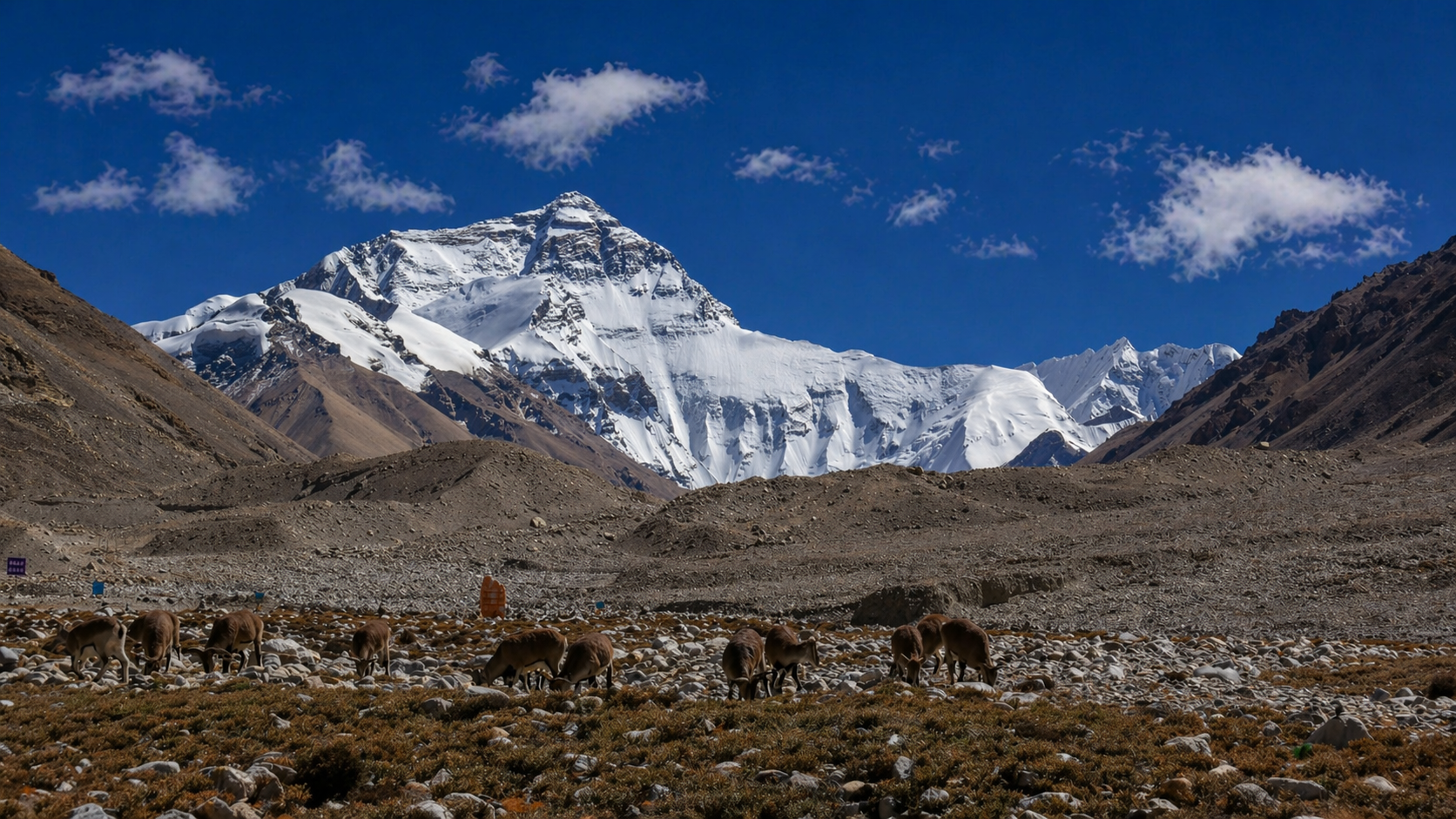
The Tibet side also gives one of the most magnificent views of the North Face of Mount Everest. When the weather is clear, Everest appears directly in front of you, rising from the high plateau with a sense of silence and power that is difficult to describe. Unlike the Nepal trekking route, this journey allows you to combine Everest with Lhasa, Shigatse, Sakya, Tibetan culture, and nomadic life in one short but deep travel experience.
This is why we believe the Tibet side is especially suitable for:
- Travelers who want a cultural journey and Himalayan scenery together.
- Guests who do not want to trek for many days.
- Photographers looking for open mountain landscapes.
- Mature travelers who prefer an overland journey with vehicle support.
- First-time visitors who want to understand Tibet before seeing Everest.
An Everest Base Camp Tour from Tibet is not necessarily “better” than the Nepal side for everyone, but for travelers who want comfort, culture, road access, and the grand view of Everest’s north side, Tibet is highly recommended.
Day 1: Arrival in Lhasa – Entering the Sacred Valley of Tibet
Route: Lhasa Gongkar Airport – Brahmaputra River – Kyichu River – Lhasa
Altitude: 3,650m
Distance: Around 45km
Accommodation: Kyichu Hotel or similar
Guide & Driver: Local Tibetans
Your journey begins when you arrive at Lhasa Gongkar Airport. The first impression of Tibet is often the light — bright, clear and slightly sharper than in lower places. As you drive from the airport toward Lhasa, the road follows the wide valley of the Brahmaputra River, known locally as the Yarlung Tsangpo. Prayer flags flutter on hillsides, villages appear beside the river, and the mountains seem to stand quietly in every direction.
The drive to Lhasa takes you along the Kyichu River Valley, a gentle introduction to the Tibetan plateau. After arrival, the most important thing is not to rush. Lhasa stands at around 3,650 meters, so the first day is for rest, hydration and slow adjustment. In the evening, you may take a gentle walk near Potala Square if you feel well. When the Potala Palace lights up against the evening sky, many travelers feel that they have truly arrived in Tibet.
Quick Tips for Day 1
- Drink plenty of warm water.
- Avoid alcohol and heavy exercise.
- Walk slowly, even if you feel strong.
- Sleep early and allow your body to adjust.
- Do not take a hot shower immediately after arrival if you feel tired.
Day 2: Lhasa Sightseeing – Potala Palace, Jokhang Temple and Barkhor Street
Route: Lhasa city sightseeing
Accommodation: Kyichu Hotel or similar
Meals: Breakfast
Guide & Driver: Local Tibetans
Your second day is dedicated to the spiritual and historical heart of Tibet. The morning begins with the Potala Palace, the most iconic landmark in Lhasa. Rising above the city from Marpo Ri Hill, the palace is more than a monument. It is a symbol of Tibetan history, architecture, faith and identity. Walking through its chapels, stairways and ancient halls, you feel the depth of centuries.
After the Potala, the journey continues to Jokhang Temple, the most sacred temple for Tibetan Buddhists. The atmosphere here is deeply moving. Outside the temple, pilgrims prostrate on the stone ground, the smell of juniper incense floats in the air, and butter lamps glow inside the chapels. For many travelers, this is the moment when Tibet becomes more than scenery. It becomes a living culture.
Around Jokhang Temple lies Barkhor Street, one of the best places to observe local life. Pilgrims walk clockwise around the temple, elderly Tibetans turn prayer wheels, small shops sell incense, turquoise, prayer flags and handmade objects. This is not a staged cultural show. It is daily life in Lhasa.
Quick Tips for Day 2
- Always walk clockwise around temples and sacred sites.
- Ask before taking close-up photos of local people.
- Remove hats when entering temple chapels.
- Speak softly inside monasteries.
- Follow your Tibetan guide’s advice about photography rules.
Day 3: Aku Tonpa Nomad Camp – The Soul of Local Tibetan Life
Route: Lhasa – Dark Yerpa – Aku Tonpa Nomad Camp – Lhasa
Accommodation: Kyichu Hotel or similar
Meals: Breakfast
Guide & Driver: Local Tibetans
Day 3 is what makes this journey different from a normal Everest Base Camp Tibet tour. Instead of simply driving from one famous place to another, you spend the day experiencing the living soul of Tibet: nomadic culture.
The excursion begins with a drive toward Dark Yerpa, one of the most atmospheric spiritual sites near Lhasa. Caves, cliffs and meditation places are scattered across the mountainside. This area gives a strong feeling of old Tibet — quiet, sacred and closely connected to the land.
Later, you continue to Aku Tonpa Nomad Camp, where the journey becomes personal. Here, the focus is not only sightseeing, but participation. You may sit inside a warm nomad-style tent, drink butter tea, taste local food, and learn how Tibetan families have lived with yaks, grasslands, seasons and mountains for generations.
One special experience is the Tibetan momo cooking class. Momos are Tibetan dumplings, usually filled with meat or vegetables. Making momos is simple in appearance but full of family feeling. You roll the dough, prepare the filling, fold each dumpling by hand, and share the meal together. The smell of steaming momos, the taste of butter tea, and the laughter around the table often become one of the strongest memories of the trip.
This experience helps travelers understand that Tibet is not only monasteries and mountains. Tibet is also people, food, families, animals, grasslands and stories passed down through generations.
What Makes the Nomad Experience Special?
- It gives you direct contact with local Tibetan life.
- It is suitable for travelers who want authentic culture, not only sightseeing.
- It creates a human connection before the long journey to Everest.
- It supports a more responsible and community-based style of Tibet travel.
- It helps you understand the relationship between Tibetan people and the landscape.
Quick Tips for Day 3
- Accept food or tea with both hands when possible.
- Try the local food even if it is new to you.
- Do not treat nomad life as a “performance”; respect it as real culture.
- Dress warmly, as camp areas can be windy.
- Bring a curious and open mind.
Day 4: Lhasa to Shigatse – Yamdrok Lake, Karola Glacier and Gyantse
Route: Lhasa – Yamdrok Lake – Karola Glacier – Palchoe Monastery – Kumbum Stupa – Shigatse
Altitude: Shigatse around 3,900m
Distance: Around 350km
Accommodation: Manasarovar Hotel or similar
Meals: Breakfast
Guide & Driver: Local Tibetans
Day 4 is one of the most scenic driving days of the journey. Leaving Lhasa, the road climbs toward one of Tibet’s most beloved lakes: Yamdrok Lake. From the high viewpoint, the lake appears in shades of turquoise, blue and green, curving between mountains like a sacred jewel. On a clear day, the color of Yamdrok is almost unreal.
The journey then continues toward Karola Glacier, where ice flows down from high mountain slopes close to the road. The glacier reminds travelers that Tibet is a land shaped by altitude, snow, wind and time. Even a short stop here gives a strong feeling of the high plateau environment.
In Gyantse, you visit Palchoe Monastery and the famous Kumbum Stupa. Gyantse has an old-world atmosphere and once played an important role as a trading and cultural town. The Kumbum Stupa, with its many chapels and layers of sacred art, is one of the architectural highlights of central Tibet.
By evening, you arrive in Shigatse, Tibet’s second-largest city and the traditional seat of the Panchen Lama.
Quick Tips for Day 4
- Keep your camera ready for Yamdrok Lake viewpoints.
- The wind can be strong near the lake and glacier.
- Do not run or jump at high passes.
- Carry sunglasses and sunscreen.
- Drink water regularly during the long drive.
Day 5: Shigatse to Rongbuk Monastery – The Road to Everest
Route: Shigatse – Tashi Lhunpo Monastery – Tsola Pass – Gyatsola Pass – Rongbuk Monastery
Altitude: Rongbuk around 5,000m
Distance: Around 340km
Accommodation: Tent lodge
Meals: Breakfast
Guide & Driver: Local Tibetans
The morning begins with a visit to Tashi Lhunpo Monastery, one of the most important monasteries in Tibet. Its golden rooftops, red walls, prayer halls and large courtyards reflect the spiritual importance of Shigatse. Monks move quietly between buildings, pilgrims turn prayer wheels, and the smell of incense follows you through the monastery lanes.
After Shigatse, the journey becomes more remote. The road climbs across Tsola Pass and Gyatsola Pass, where the horizon opens wider and the land feels increasingly vast. As you approach the Everest region, the landscape changes. Villages become smaller, the air becomes thinner, and the mountains begin to dominate the skyline.
Finally, you reach Rongbuk Monastery, located at around 5,000 meters. This is the main overnight area for travelers visiting the Everest Base Camp region from Tibet. The feeling here is very different from Lhasa or Shigatse. The air is cold and crisp. The sky feels close. If the weather is clear, the north face of Mount Everest stands in the distance like a silent giant.
At night, the stars can be extraordinary. The temperature drops, the wind moves across the valley, and the mountain becomes a dark shape beneath the sky. This is one of the most powerful moments of the entire journey.
Quick Tips for Day 5
- Move very slowly at Rongbuk.
- Avoid drinking alcohol at high altitude.
- Keep warm clothes ready before sunset.
- Do not expect luxury accommodation here.
- Inform your guide immediately if you feel headache, nausea, chest tightness or serious dizziness.
Day 6: Everest Base Camp to Sakya – Himalayan Views and Ancient Monastery Walls
Route: Everest Base Camp area – Drila Pass – Sakya Monastery
Altitude: Sakya around 4,050m
Distance: Around 270km
Accommodation: Yuanfu Hotel or similar
Meals: Breakfast
Guide & Driver: Local Tibetans
Waking up near Everest is an unforgettable experience. If the weather is clear, sunrise brings soft light to the mountain face, slowly changing the color of the snow and rock. The Everest region is not noisy. It does not need to impress you with anything artificial. Its power is in its silence.
From the Everest Base Camp area, you may enjoy views of major Himalayan peaks, including Everest, Lhotse and Makalu, especially from high viewpoints such as Drila Pass when conditions are clear. The view is wide, raw and deeply moving.
Later, the road leads to Sakya, one of the most historically important monastic towns in Tibet. Sakya Monastery has a very different appearance from many other Tibetan monasteries. Its fortress-like walls, grey-red-white colors and ancient atmosphere give it a strong sense of history. After the raw power of Everest, Sakya offers a quieter and more reflective experience.
This day is one of transition: from the world’s highest mountain back into the deep spiritual and cultural history of Tibet.
Quick Tips for Day 6
- Morning weather is often better for Everest views.
- Keep extra batteries warm, as cold weather drains them quickly.
- Respect monastery photography rules in Sakya.
- The descent from Rongbuk may make you feel more comfortable.
- Continue drinking water even after leaving the highest altitude.
Day 7: Sakya to Lhasa – Across the Brahmaputra River Valley
Route: Sakya – Tagdruk Ferry area – Brahmaputra River – Nyemo County – Chushur – Kyichu Valley – Lhasa
Altitude: Lhasa around 3,650m
Distance: Around 430km
Accommodation: Kyichu Hotel or similar
Meals: Breakfast
Guide & Driver: Local Tibetans
The return journey to Lhasa is long but meaningful. After days of high passes, monasteries and Himalayan scenery, the road gradually brings you back toward the Kyichu Valley. You pass through wide river landscapes, Tibetan villages and open plateau views. The Brahmaputra River appears again, reminding you that this journey has followed some of Tibet’s most important natural and cultural routes.
By the time you return to Lhasa, many travelers feel differently from the first day. The city may look the same, but your understanding has changed. You have seen the sacred center of Tibet, shared food with local people, crossed glacier roads, stood near Everest, and visited ancient monasteries that carry centuries of memory.
Quick Tips for Day 7
- It is a long driving day, so keep snacks and water with you.
- Use the return journey to ask your guide deeper cultural questions.
- Take short walks during stops to keep comfortable.
- Do not forget to back up your photos.
- Enjoy your final evening in Lhasa at a relaxed pace.
Day 8: Departure from Lhasa – Leaving Tibet, Carrying the Journey
Route: Lhasa – Kyichu Valley – Gongkar Airport
Distance: Around 45km
Trip Ends
On the final morning, you leave Lhasa through the familiar Kyichu Valley. The road back to the airport feels different from the arrival day. Eight days earlier, Tibet may have felt mysterious and distant. Now, it has faces, flavors, voices, mountains and memories.
An Everest Base Camp Tour from Tibet is short in number of days, but deep in experience. It gives you Lhasa’s sacred atmosphere, local Tibetan life, high plateau scenery, Himalayan power, and the quiet wisdom of the road.
For many travelers, this is not only a trip to Everest. It is a journey into Tibet itself.
Know Before You Go
How to Deal with High Altitude on an Everest Base Camp Tour from Tibet
Altitude is one of the most important parts of this journey. Lhasa is already at around 3,650 meters, Shigatse is around 3,900 meters, Sakya is around 4,050 meters, and Rongbuk Monastery/Everest Base Camp area is around 5,000 meters.
The best way to manage altitude is to ascend gradually. This itinerary is designed to begin with two nights in Lhasa before moving higher. The day excursion to Aku Tonpa also gives you an active but controlled acclimatization experience before the long overland journey west.
Practical advice:
- Walk slowly, especially in Lhasa and Rongbuk.
- Drink warm water often.
- Avoid alcohol during the trip.
- Eat light meals, especially before reaching higher places.
- Sleep well and avoid overexertion.
- Tell your guide immediately if symptoms become uncomfortable.
- Bring any personal medication recommended by your doctor.
Mild headache or tiredness can happen at high altitude, but serious symptoms should never be ignored. Our local Tibetan guide and driver will monitor the situation carefully and respond according to the guest’s condition.
What If I Get Altitude Sickness During the Trip?
If you feel strong headache, vomiting, serious dizziness, breathing difficulty, chest tightness, confusion or extreme weakness, you must inform your guide immediately. Depending on the condition, the guide may advise rest, oxygen support, descending to a lower altitude, or seeking medical help.
Safety always comes first. No mountain view is more important than your health.
Who Should Not Join an Everest Base Camp Tour?
This trip is not recommended for people with serious heart disease, uncontrolled high blood pressure, serious lung disease, severe asthma, recent surgery, or other medical conditions that may become dangerous at high altitude. Travelers with health concerns should consult their doctor before booking.
This is not an extreme trekking expedition, but the altitude is real. Rongbuk is around 5,000 meters, and even healthy travelers need to respect the environment.
Is the Tibet Side of Everest Better Than the Nepal Side?
It depends on what kind of experience you want.
The Nepal side is famous for trekking. If your dream is to hike for many days through the Khumbu region, then Nepal is the classic trekking route.
The Tibet side is different. An Everest Base Camp Tour from Tibet is better for travelers who want:
- A shorter journey to see Everest.
- A comfortable overland route with vehicle support.
- A strong combination of culture and mountain scenery.
- Lhasa, Yamdrok Lake, Shigatse and Sakya in one trip.
- A magnificent view of Everest’s north face.
- A journey suitable for travelers who do not want a long trek.
For many of our guests, Tibet is the better choice because it combines Everest with the wider soul of Tibet.
How Is the Accommodation at Everest Base Camp?
Accommodation near the Everest Base Camp area is basic. Travelers usually stay in a tent lodge or simple guesthouse-style accommodation near Rongbuk. You should not expect the same comfort as hotels in Lhasa or Shigatse.
Rooms are simple, heating may be limited, toilets are basic, and nights can be cold. However, the location is extraordinary. The purpose of staying here is not luxury; it is the rare chance to sleep near the world’s highest mountain and experience the silence of the high Himalayas.
In Lhasa, you may stay at Kyichu Hotel or similar. In Shigatse, accommodation such as Manasarovar Hotel or similar is more comfortable. In Sakya, hotels such as Yuanfu Hotel or similar provide a simple but acceptable stay for this remote region.
How Is the Road Condition from Lhasa to Everest Base Camp?
The road from Lhasa to Everest Base Camp is generally good by Tibetan plateau standards. The main route from Lhasa to Shigatse is well developed, and the road onward to the Everest region is also much better than in the past. However, this is still a high-altitude overland journey. Some sections are winding, remote and affected by weather.
Travelers should expect:
- Long driving hours on some days.
- High mountain passes.
- Strong sunlight and wind.
- Possible road delays due to weather or local conditions.
- Dramatic but remote landscapes.
A private vehicle with an experienced Tibetan driver is very important for this journey.
How Far in Advance Should We Book?
For an Everest Base Camp Tour from Tibet, we recommend booking at least one to two months in advance when possible. Tibet travel requires permits, hotel arrangements, guide and vehicle planning, and sometimes additional documents depending on your route and nationality.
During busy travel seasons, earlier booking is better. If you plan to travel during spring, summer, autumn, or major holiday periods, we strongly recommend confirming earlier to secure better hotels and smoother permit handling.
How Is the Internet During the 8-Day Everest Base Camp Tour?
Internet access is usually good in Lhasa and Shigatse, especially at hotels. In smaller towns and remote areas, the connection may be slower. Around Rongbuk and the Everest Base Camp area, internet can be limited or unstable depending on signal and weather.
You should not rely on strong internet every day. Download important documents, maps, translation apps and entertainment before departure from Lhasa.
Why Is This Trip Lhasa to Lhasa?
This itinerary starts and ends in Lhasa because it offers better altitude adjustment and smoother logistics. Arriving from mainland China to Lhasa allows you to begin at 3,650 meters and spend time acclimatizing before going higher.
Coming from Nepal to Tibet means crossing quickly from a lower altitude to a very high plateau area. For some travelers, this can be harder for acclimatization. Starting from Lhasa gives your body more time to adjust before reaching Rongbuk at around 5,000 meters.
A Lhasa-to-Lhasa route is also convenient for travelers flying or taking the train from mainland China.
Where Can We Change Money for the Trip?
The best place to change money is usually in major Chinese cities before entering Tibet, or in Lhasa at banks that provide currency exchange services. It is not recommended to wait until remote areas to change money.
Most expenses during the tour are already arranged if you book a package, but you should carry some Chinese yuan cash for personal expenses, drinks, snacks, small shops, or tips.
What Kind of Food Can We Get During the Trip?
In Lhasa and Shigatse, there are more food choices, including Tibetan, Chinese, Nepalese-style and some Western-style meals. On the road and in remote areas, food becomes simpler.
You may find:
- Tibetan noodles.
- Momos.
- Fried rice.
- Vegetable dishes.
- Yak meat dishes.
- Eggs and simple breakfast items.
- Noodle soup.
- Tea, hot water and basic snacks.
At Rongbuk and remote stops, food is basic, so it is useful to bring some personal snacks, energy bars, nuts or instant food if you have special preferences.
Can We Use Our Own Mobile SIM Cards in Tibet?
Foreign SIM cards may work with international roaming, but the signal and internet speed can vary. Many travelers use roaming from their own country, while others may choose a local Chinese SIM card if available and suitable for their phone.
Please note that internet access in China may be different from what you are used to, and some international apps or websites may not work normally without proper preparation.
Can We Trek to Everest Base Camp at 5,200m?
For environmental protection, the main tourist visiting area on the Tibet side is now around Rongbuk Monastery and the Everest Base Camp viewing area at about 5,000 meters. Travelers no longer visit the old-style base camp point in the same way as before.
So, for normal tourists, there is no standard trek to the oldEverest & Tibetan Nomad Experience: A Unique 8 Day Adventure marker at 5,200 meters. However, if you enjoy walking, you can take short walks around the Rongbuk/Everest viewing area, depending on local regulations, weather, your physical condition and your guide’s advice.
The most important thing is to respect environmental protection rules and local regulations.
Why Travel with Local Tibetans?
For us, this is one of the most important parts of the journey. Tibet is not only a destination; it is our home. When you travel with local Tibetan guides and drivers, you receive more than information. You receive local understanding, cultural sensitivity and real experience from people who know the land deeply.
A local Tibetan guide can explain the meaning behind a monastery, help you understand pilgrimage customs, introduce local food, translate conversations, and guide you through cultural etiquette. A local Tibetan driver understands plateau roads, weather, driving rhythm and safety.
This is especially important on an Everest Base Camp Tour from Tibet, where altitude, distance, culture and road conditions all require experience.
Final Thoughts: How 8 Days in Tibet Can Change Your Perspective
This journey begins with the sacred beauty of Lhasa and ends with the memory of Everest’s north face. But between those two points, something deeper happens. You drink tea in Tibetan homes, walk with pilgrims, make momos at Aku Tonpa, cross glacier roads, listen to monastery chants, breathe the thin air at 5,000 meters, and see how vast and powerful the Tibetan plateau truly is.
An Everest Base Camp Tour from Tibet is not only about reaching a famous place. It is about understanding the road to Everest — the people, valleys, monasteries, rivers, lakes and stories that make the journey meaningful.
For travelers who want a short but deeply authentic Tibet experience, this 8-day route offers one of the best balances: Lhasa’s spiritual heart, Tibetan nomad culture, classic overland scenery, and the unforgettable presence of Mount Everest.