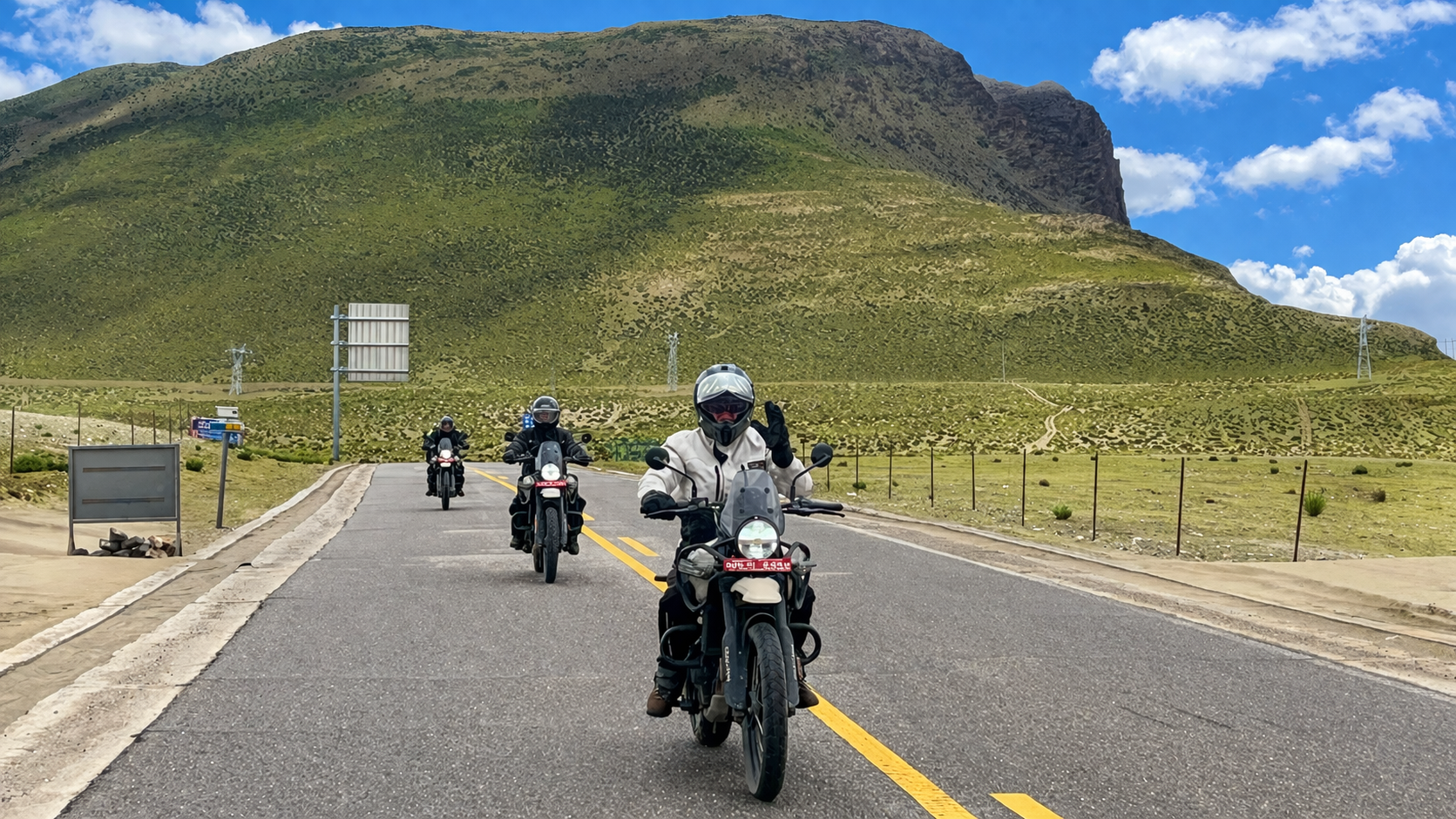
There are road trips, and then there is a Tibet motorcycle road trip. No other journey on Earth combines altitude, raw wilderness, ancient spirituality, and pure riding freedom quite like Tibet. As you embark on this adventure, you’re not just crossing a country — you’re crossing the rooftop of the world, riding at elevations that challenge your body, your machine, and your understanding of what adventure truly means.
For riders from Europe, North America, and Australia who have conquered the Alps, Route 66, or the mountain roads of Southeast Asia, Tibet represents the final frontier. This ride defines all other rides. This guide — written by Tibet Shambhala Adventure, a Tibetan-owned agency based in Lhasa — gives you everything you need to plan your Tibetan Plateau motorbike adventure: the exact route, necessary permits, gear, altitude strategy, and cultural encounters that transform a holiday into a life-changing story.
Why Tibet? The Case for the Roof of the World
Let’s be clear: Tibet is not an easy destination. The majority of the route sits between 4,000 and 5,220 meters above sea level. The weather can change rapidly. The logistics are complex. And the permits require careful planning. So why do serious motorcycle travelers consistently rank a Tibet high-altitude motorbike tour as the pinnacle of adventure riding?
Because difficulty is the point. And the reward is unlike anything else on Earth.
Riding across the Tibetan Plateau, you will pass through a landscape that feels both ancient and cosmic. The sky is a deep, almost impossible blue. The Himalayas rise like walls to another dimension. Rongbuk Monastery sits beneath the north face of Everest. Tibetan nomads with vast yak herds cross your path on endless grasslands. The silence between engine revs is profound. And in the old alleyways of Lhasa, pilgrims complete their devotions as they have for over a thousand years.
This isn’t just a motorcycle tour. It’s a journey that will change how you view the world.
Critical Visa-Free Entry Update (Effective February 17, 2026)
New Policy: As of February 17, 2026, travelers from Canada, the United Kingdom, and EU countries are now eligible for 30 days of visa-free entry to China for tourism purposes. This is a major update for Western motorbike travelers looking to explore Tibet.
- Nationalities Included: Citizens of the UK, Canada, Australia, and nearly all EU countries (including France, Germany, Italy, and Spain) can now enter China visa-free for up to 30 days.
- Nepal-Tibet Border: For these riders, no Chinese visa is required at all — you only need the Tibet Travel Permit and the motorbike-specific permits, which Tibet Shambhala Adventure will arrange.
For other nationalities, you can apply for a Chinese individual visa in your home country before departure.
Required Permits:
- Tibet Travel Permit — managed by Tibet Shambhala Adventure
- Motorbike License Permit
- China Customs Permit for the motorbike
- Temporary Tibetan Motorbike Driving License
- Temporary Tibetan motorbike plate number
Please provide your passport and necessary documents at least one month in advance for the necessary processing.
The Route: 11 Days from Kathmandu to Everest Base Camp and Back
This loop tour is a masterpiece of road design, combining the most dramatic landscapes and cultural experiences of the Tibetan Plateau. The route takes you through Nepal, into Tibet via Kyirong and the Friendship Highway, past Yamdrok Lake, Karola Glacier, Gyantse, Shigatse, and Sakya, and finally to Everest Base Camp before looping back through Drila La Pass.
Stage 1: Kathmandu → Kyirong Border → Kyirong Town (Day 1)
Your adventure begins in Kathmandu, where your guide and support vehicle will meet you. After completing the immigration formalities at Sybrubesi, you’ll ride the 20km to Kyirong Town (2,800m), nestled in a beautiful gorge. The town is historically significant as the birthplace of Milarepa, one of Tibet’s greatest yogis and poets.
Stage 2: Kyirong → Pekutso Lake → New Tingri (Day 2)
Departing from Kyirong, you’ll begin your ascent onto the Tibetan Plateau. You’ll ride past Pekutso Lake, a shimmering turquoise lake, and ascend high mountain passes, reaching New Tingri at 4,050m — your first night on the roof of the world.
Stage 3: New Tingri → Shigatse (Day 3)
The journey continues across the plateau, with expansive views of the Himalayas. You’ll ride through Gyatso La Pass at 5,220m, the highest point of the outbound journey, and descend into Shigatse, Tibet’s second-largest city, at 3,800m.
Choosing Your Motorcycle for the Tibet Adventure
At Tibet Shambhala Adventure, we provide a variety of bikes for different riders:
- Royal Enfield: The iconic choice for many. Known for its reliability and comfort on rugged roads.
- Chinese Motorbikes (400cc+): After feedback from experienced riders, we now also offer these Chinese-made bikes, known for their smooth throttle response and reliable performance at high altitudes.
- BMW 800cc-1200cc: For those seeking power and luxury, the BMW GS series provides a comfortable, powerful ride through Tibet’s rugged landscapes.
Safety, Mechanic Support, and Altitude Acclimatization
On-Site Mechanic & Safety: We provide a professional mechanic from Nepal who is always with the group to ensure any issues with the bikes are resolved immediately. Spare parts are carried in our support vehicle for peace of mind.
Altitude Acclimatization: We ensure proper acclimatization for all riders. You’ll spend your first nights in Kyirong (2,800m) and New Tingri (4,050m), followed by Lhasa (3,650m) before heading to Everest Base Camp.
Practical Information for Western Riders
- Best Time to Ride: The ideal months are April, May, June, September, and October.
- Currency: Chinese Yuan (CNY) is used in Tibet. Exchange your USD, EUR, or GBP at the Kyirong border, Shigatse, or Lhasa.
- Food: Enjoy a variety of continental and Tibetan foods along the route.
- Weather: Tibet’s weather is sunny and windy, with temperature swings from +20°C to -10°C at high altitudes. Bring sun protection and rain gear.