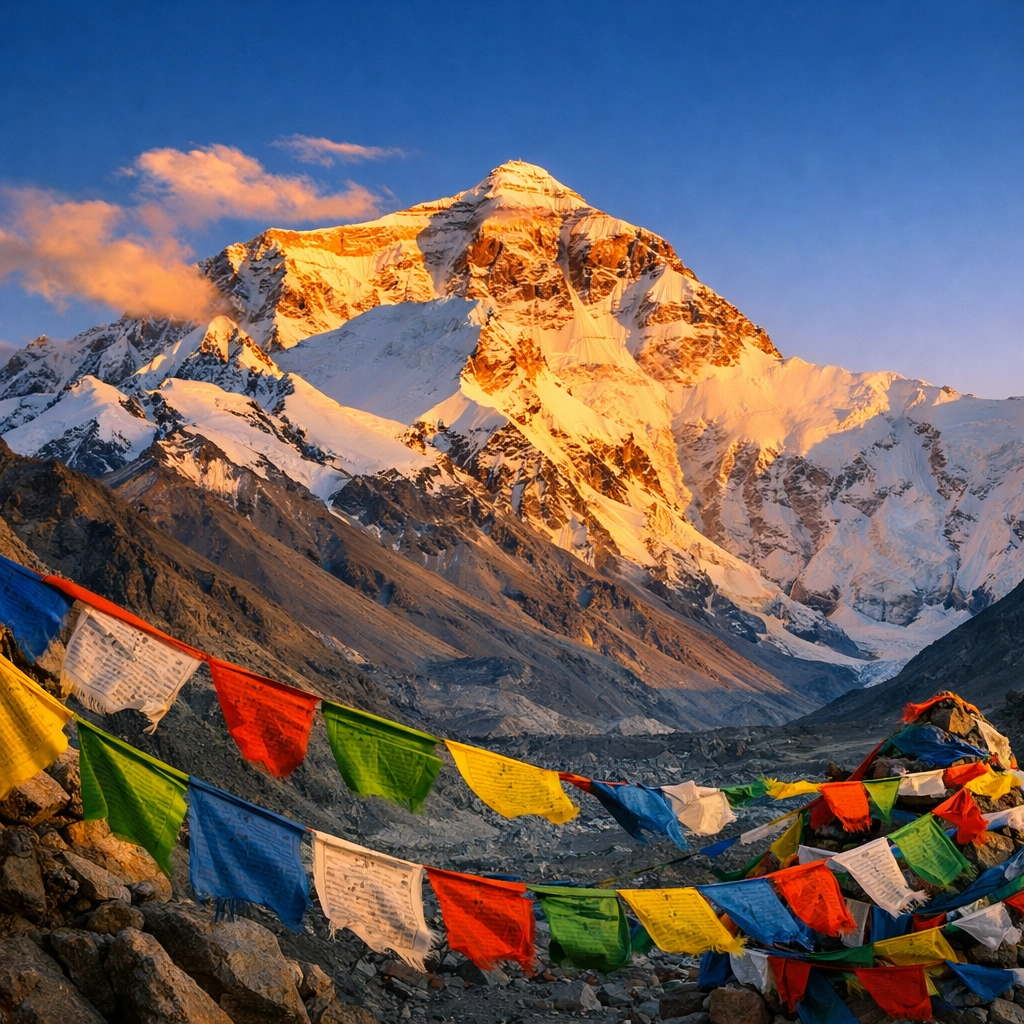
What to Pack for Tibet Everest Base Camp Tour
A practical guide from Tibet Shambhala Adventure — your local Tibetan-owned tour operator in Lhasa
Planning for a Tibet Everest Base Camp tour is not quite like preparing for any other trip. You are heading to one of the highest and most remote places on earth — where the altitude reaches above 5,000 metres, the UV radiation is among the strongest in the world, the wind can be fierce, the air is dry, and the temperature can drop sharply after sunset even in summer. Getting your packing right is not just about comfort. It is about your health and safety.
At Tibet Shambhala Adventure, we are a local Tibetan-owned tour operator based in Lhasa, and our team has been arranging overland tours to Everest, Tibet travel permits, cultural journeys, and high-altitude experiences for many years. We have seen firsthand what makes a traveller’s experience smooth — and what causes unnecessary problems. This guide is our honest, practical advice to help you pack well for our 8-Day Tibet Everest Base Camp Tour with Tibetan Nomad Experience.
1. Understand the Nature of a Tibet Everest Base Camp Tour
Before we talk about what to pack, it is important to understand what kind of journey this is. Our 8-day program is primarily an overland tour — a road journey across the Tibetan plateau from Lhasa to the Everest region and back. This is not a multi-week trekking expedition like the Nepal Everest Base Camp trek, which requires technical hiking gear and weeks of physical preparation.
Our route takes you through Lhasa’s spiritual heart, past the stunning turquoise Yamdrok Lake, through the ancient streets of Shigatse and Sakya, into Tibetan villages, and out to the vast open landscape of the Everest region. You will visit Rongbuk Monastery — the highest monastery in the world — and reach the Everest Base Camp viewpoint area where the North Face of Everest rises before you. Along the way, you will also have a genuine Tibetan nomad experience, spending time with local herding families on the plateau.
The walks on this tour are generally short to moderate. You do not need mountaineering equipment. But you absolutely need to be prepared for altitude, cold, wind, and sun.
2. Clothing: Dress in Layers
Tibet’s weather is unpredictable, and the temperature difference between midday sun and early morning or evening can be extreme. The only sensible approach is layering — wearing clothes that you can add or remove as conditions change throughout the day.
Base Layer
Start with thermal or moisture-wicking base layers next to your skin. These help regulate body temperature and keep sweat away. Merino wool or good synthetic thermals work well.
Mid Layer
A warm fleece jacket or mid-layer is essential. This is your insulation layer that traps warmth when you stop moving or when the temperature drops.
Outer Layer
A windproof and waterproof jacket is one of the most important items you will pack. Even in the dry season, the Tibetan plateau can experience sudden rain, hail, or very strong winds, especially in the Everest region. Your outer shell should be both wind-resistant and rain-resistant. A raincoat that doubles as a windproof layer is ideal.
Down Jacket
Bring a good quality down jacket. Even in May or June, mornings and evenings near the Everest region can be very cold. In autumn or early spring, a down jacket is absolutely non-negotiable.
Trousers
Comfortable, non-restrictive trousers work well for most of this tour. Pack one pair of warm trousers or trekking trousers for cooler days. Jeans are not recommended — they are heavy, slow to dry, and cold when wet.
Socks and Gloves
Bring at least three to four pairs of warm, moisture-wicking socks — wool or technical hiking socks. Cold feet at high altitude are miserable. Pack a warm hat that covers your ears and lightweight gloves. If you are travelling in winter or early spring, consider heavier gloves.
Scarf or Neck Gaiter
A scarf or buff is surprisingly useful on this trip — for warmth, for dust on dusty area, and for wind protection in exposed areas.
3. Shoes: Comfortable Walking Shoes Are Enough
You do not need heavy mountaineering boots for this tour. What you need is a pair of comfortable, well-fitted walking shoes or light hiking shoes with good grip. The key word is comfortable — shoes that you have already worn and broken in. Do not bring a brand-new pair of hiking boots. New boots cause blisters, and blisters at altitude are the last thing you want.
A pair of sandals or lightweight shoes for evenings and guesthouses is also a good idea to give your feet a rest.
4. Sun Protection in Tibet: Take This Seriously
Tibet sits on the world’s highest plateau, with thin air that provides much less UV protection than lower altitudes. The sun in Tibet is intense — more so than almost anywhere else most travellers have been. Combined with reflective snow, open landscape, and long hours of clear sky, UV radiation is a genuine health risk, not just a comfort issue.
- Sunscreen: SPF 50+ is the minimum. Bring enough for daily application on all exposed skin — face, hands, neck, and ears.
- Sunglasses: Good UV-protective sunglasses are essential. At altitude, eye damage from UV is a real concern.
- Lip balm with SPF: Your lips will dry and crack quickly. SPF lip balm is necessary, not optional.
- Sun hat: A wide-brimmed hat gives you extra protection during outdoor stops and walks.
- Moisturiser and hand cream: The air in Tibet is extremely dry. Your skin will feel the effects within the first day. Pack a good moisturiser and apply it regularly.
5. Personal Medicine and Health Preparation
Our Tibetan guide and vehicle carry oxygen canisters and a basic first-aid kit for emergency use. However, you should not rely on this as your primary source of health support. Every traveller should bring their own personal medicines, tailored to their own needs.
- Headache medicine (paracetamol or ibuprofen) — headaches are the most common symptom of mild altitude sickness
- Stomach medicine — change of diet and altitude can affect digestion
- Cold and throat medicine — the dry air and altitude can irritate your respiratory system
- Throat lozenges
- Blister plasters
- Rehydration salts — staying hydrated is critical at high altitude
- Any altitude sickness medication recommended by your own doctor — please consult your doctor before travelling
- Personal prescription medicines — bring enough for the full trip plus a few extra days
We strongly recommend speaking with your doctor before your Tibet Everest Base Camp tour, especially if you have any heart or lung conditions. Altitude affects everyone differently.
6. Electronics: Keep It Practical
You will want to document this journey — the landscapes, the monasteries, the nomad families, the face of Everest. Here is what we recommend bringing:
- Smartphone — for photos, maps, and communication
- Camera — a mirrorless or DSLR camera if you are a photography enthusiast; the Everest region offers extraordinary shots
- Extra memory cards — you will take more photos than you expect
- Charger and universal power adapter — Tibet uses Chinese standard plugs (Type A and Type I)
- Small, airline-approved power bank — for charging on long drive days
- Flashlight or headlamp with spare batteries — guesthouses in remote areas sometimes have limited electricity
7. Important: Power Banks and Battery Rules in China
This is something we need to be very clear about, because it causes problems at airports more often than you might expect.
In China, power banks are only permitted on flights if they carry the 3C certification mark (also called the CCC mark — China Compulsory Certificate). If your power bank does not have this mark clearly visible, it may be confiscated at airport security. Chinese airport staff are strict about this, and there are no exceptions.
Beyond the 3C mark requirement, all power banks must comply with standard airline lithium battery rules: they must be carried in hand luggage only, never in checked baggage. Most airlines allow power banks up to 100Wh (roughly 27,000mAh). Anything above this requires airline approval, and very large capacity banks are not allowed at all.
Most importantly: do not bring large battery boxes, portable power stations, or oversized lithium battery packs. These are not permitted on flights in China regardless of brand or quality. Even if they seem convenient for charging in remote areas, they will be stopped at security. A small, clearly labelled, 3C-certified power bank within airline limits is all you need.
8. Internet Access: Buy an eSIM Before You Leave Home
This is one of the most practical pieces of advice we can offer, and it is often overlooked until it is too late. Foreign SIM cards and most international roaming plans do not work properly in China. Google, Instagram, WhatsApp, Facebook, YouTube, and most foreign platforms are not working properly here in China Tibet.
The best solution is to purchase an eSIM from a reputable provider before you leave your home country. These eSIMs are specifically designed to work in China while giving you access to your regular apps and social media platforms through a secure connection. Some popular options include Airalo, Nomad, or China-compatible travel eSIMs.
Crucially, you must set up your eSIM before you arrive in China. Once you land in China, you may not be able to access the provider’s app or website to complete the setup as you can not send verification code to your mobile number. This is a step that many travellers miss and then regret. Check that your phone supports eSIM, download the eSIM provider app, purchase and install the plan, and test it — all before you board your flight.
9. Travel Documents: Get Them Right Before You Go
Tibet requires more documentation than most destinations. Our team at Tibet Shambhala Adventure handles the Tibet Travel Permit process for all guests, but there are documents you need to arrange yourself.
- Valid passport — at least six months validity beyond your travel dates
- Chinese visa — required for most nationalities before entering China (check current visa free policy and requirement for your passport)
- Tibet Travel Permit — arranged by Tibet Shambhala Adventure on your behalf
- Flight or train booking confirmations
- Travel insurance — comprehensive coverage including high altitude and emergency evacuation
- Emergency contact details in both English and Chinese
- Copies of all documents — keep digital copies in cloud storage and physical copies in a separate bag from the originals
10. Day Bag Essentials
Every day on the Tibet Everest Base Camp tour, you should carry a small day bag with these items:
- Passport and permit copies
- Phone and camera
- Sunglasses and sun hat
- Sunscreen and SPF lip balm
- Water bottle — hydration is essential at altitude
- Snacks — nuts, energy bars, or dried fruit for long drive days but not compulsory
- Personal medicine and first aid basics
- Warm layer — even on a warm afternoon, the temperature can drop quickly
- Tissues and wet wipes
- Hand sanitiser
- 3C-certified small power bank
- Cash in Chinese Yuan (RMB) — many places in rural Tibet do not accept cards or foreign payment apps unless you can pay by WeChat
11. What Not to Bring
As important as what to pack is what to leave at home:
- Large battery boxes or portable power stations — not permitted on Chinese flights
- Drones — drone use in Tibet is heavily restricted and requires specific permits; do not bring one unless you have confirmed this in advance with us
- Heavy climbing or mountaineering gear — unnecessary for an overland tour
- Too many clothes — resist the temptation to overpack; you will be carrying your bag up and down guesthouses
- Brand-new hiking boots — break in your footwear at home first
- Expensive jewellery or valuables you cannot afford to lose
- Oversized or overweight luggage — road conditions on the route to Everest can be rough
- Political books, flags, or sensitive printed materials — these can cause serious issues at security checkpoints in Tibet
- Fresh fruit or meat — these items are prohibited from being brought into Tibet from outside the region, and will be confiscated at checkpoints
- Large quantities of unprescribed medicine
- Excessive packaged food — local food is available and part of the experience
12. The Tibetan Nomad Experience: A Few Special Notes
One of the highlights of our 8-day Tibet Everest Base Camp Tour program is the Tibetan nomad experience — spending time with a local herding family on the plateau. This is not a performance or a tourist show. It is a genuine cultural exchange, and it deserves genuine respect.
For this part of the journey, dress modestly and practically. Warm, comfortable, casual clothing is appropriate. Bring your camera, but ask before photographing people. Come with an open mind and genuine curiosity. A few simple gestures of respect — removing shoes when entering a tent, accepting food and drink graciously, showing interest in daily life — go a very long way.
This experience is something that many of our guests say they remember long after the view of Everest has faded. Pack for it thoughtfully.
13. Physical and Mental Preparation for High Altitude
No amount of good gear replaces good preparation. Altitude sickness can affect anyone regardless of fitness level. Here is what we recommend before your Tibet trip:
- Arrive in Lhasa with at least one full rest day before we begin the overland journey — this is built into our 8-day program
- Stay well hydrated in the days before and during the tour
- Avoid alcohol in the first few days at altitude
- Sleep well the night before each travel day
- Walk slowly, eat lightly, and listen to your body
- Tell your guide immediately if you feel unwell — do not push through serious symptoms
Mentally, prepare for a journey that is raw and real. The roads can be long and mountain Zigzag road through many high mountain passes. The guesthouses near the Everest region are basic. The sky is a colour you may never have seen before. The space around you is extraordinary. This is not a luxury resort trip — it is a genuine high-altitude adventure through one of the most magnificent landscapes on earth.
Final Packing Advice from Tibet Shambhala Adventure
After many years of leading guests through Tibet, across the plateau, and out to the foot of Everest, our advice is always the same: pack warm enough, light enough, and practical enough.
You do not need to bring everything. You do need to bring the right things. Layered clothing for the cold and wind. Strong sun protection for the fierce altitude light. Your personal medicines and health preparation. A small, 3C-certified power bank. An eSIM set up before you leave home. Your documents in order. And an open heart for everything that Tibet will show you.
Our Tibet Everest Base Camp tour is not only about the mountain, as spectacular as it is. It is about the journey across the plateau — the lakes, the monasteries, the nomadic families, the slow unfolding of a landscape unlike anywhere else. We want you to arrive prepared so that you can be fully present for all of it.
If you have any questions about what to bring — or anything else about preparing for your Tibet journey — our team in Lhasa is always happy to help. That is what being a local operator means to us. To get more detailed information about Tibet Everest Base Camp Tour with Tibetan Nomad Experience, Please contact at sales@shambhala-adventure.com
Recommended Tibet Tours & Trekking