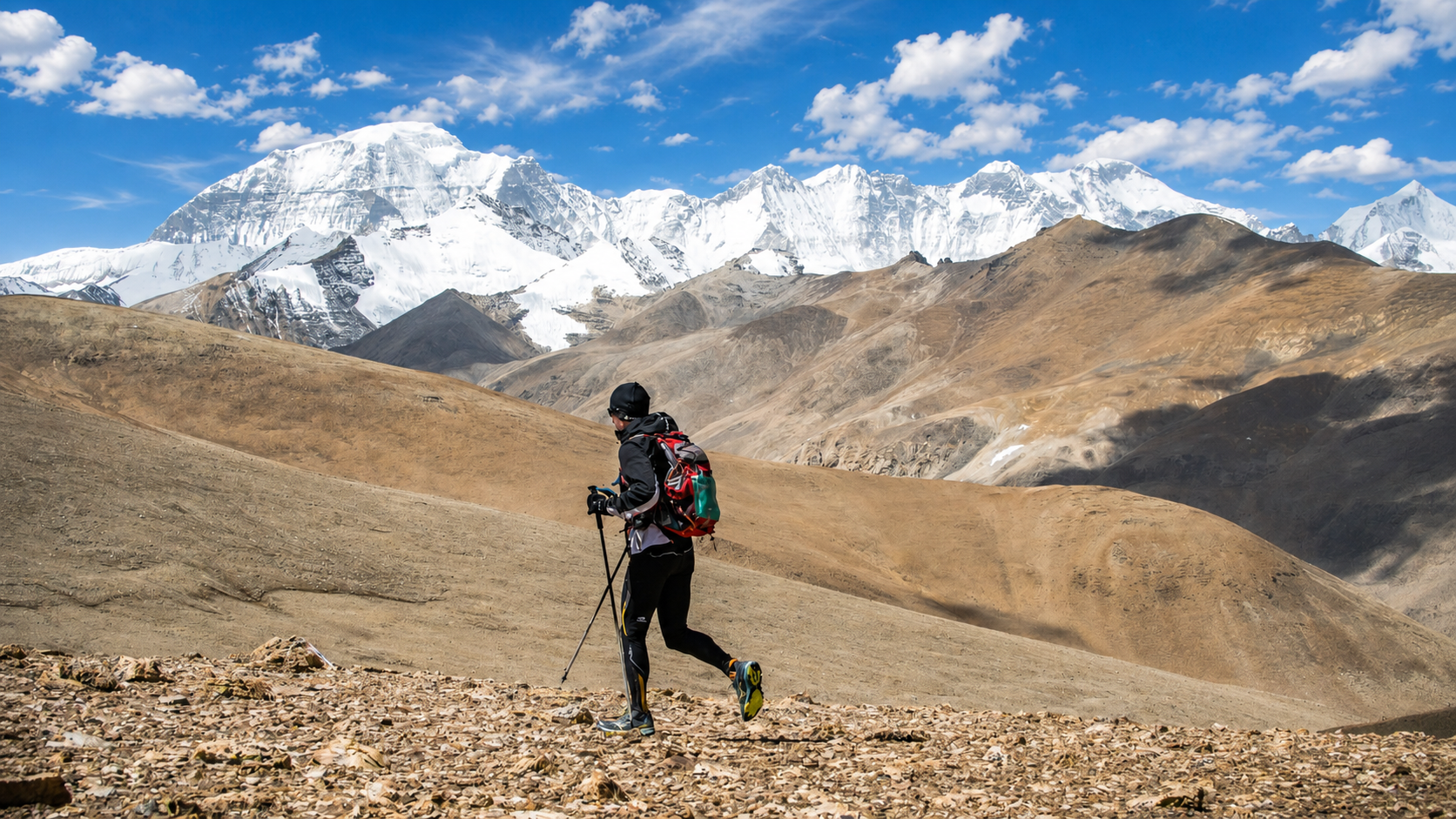
How to Get to Tibet for an Everest Base Camp Group Tour | Tibet Shambhala Adventure
By Tibet Shambhala Adventure — Your Local Tibetan Travel Team in Lhasa
Every year, travelers from across the world write to us with the same question: “I want to join an Everest Base Camp group tour in Tibet — but how do I actually get there?”
It is a very fair question. Tibet is not like arriving in Bangkok or Barcelona. Getting here takes planning, and the journey itself is part of the adventure. Whether you are flying in from Europe, North America, Southeast Asia, or crossing over from Nepal, the route you choose to reach Lhasa will shape how ready you feel when the tour begins.
At Tibet Shambhala Adventure, we are a fully Tibetan-owned agency based here in Lhasa. We organize Everest Base Camp group tours and tailor-made Tibet tours throughout the year. We have helped thousands of international travelers figure out their entry route, arrange the Tibet Travel Permit, and arrive on time for their group departure. This article is written from that real operational experience — not from a generic travel database.
There are two main ways to enter Tibet for an Everest Base Camp group tour:
- From Nepal — flying directly from Kathmandu to Lhasa
- From mainland China — by flight, train, or overland road
For most travelers joining a fixed-date Everest Base Camp group tour, flying to Lhasa is the best and most reliable option. It is faster, more predictable, and gives you the best chance of matching your group tour departure date without stress.
Let us explain each option honestly, so you can make the right decision for your situation.
Why Most Everest Base Camp Group Tours Begin in Lhasa
Before we talk about how to reach Tibet, it helps to understand why Lhasa is almost always the starting point for an Everest Base Camp group tour.
Lhasa sits at 3,650 metres above sea level. Everest Base Camp — the Tibetan side, known as Rongbuk Base Camp — is at around 5,000 metres. That is a significant altitude difference, and your body needs time to adjust. Driving directly from the airport to high altitude without acclimatizing is not safe and can spoil the entire experience.
Lhasa is also home to Tibet’s main airport and the Lhasa railway station, making it the natural entry hub for Tibet travel. The Tibet Travel Permit — the mandatory document every foreign visitor needs — is normally checked at Lhasa Gonggar Airport and mainland China Airports or Train station or at key checkpoints. All this happens through the arrival in Lhasa.
A well-designed Everest Base Camp group tour from Lhasa typically includes:
- Day 1–3 in Lhasa: Potala Palace, Jokhang Temple, Barkhor Street, Drepung or Sera Monastery
- Day 4 onward: Drive west via Gyantse or directly to Shigatse (Tashilhunpo Monastery)
- Day 5 : Continue to Tingri and the high plateau
- Day 6: Arrive at Rongbuk Monastery and Everest Base Camp
This gradual western progression — Lhasa at 3,650m → Shigatse at 3,900m → Tingri at 4,300m → Everest Base Camp at 5,000m — is not accidental. It is the most sensible acclimatization route into the highest region of the Tibetan plateau.
At Tibet Shambhala Adventure, every Everest Base Camp group tour we design follows this logic, with local Tibetan guides who understand both altitude management and the cultural significance of each place along the way.
Option 1 — Flying from Kathmandu, Nepal to Lhasa
For travelers already spending time in Nepal, the Kathmandu to Lhasa flight is one of the most spectacular and convenient ways to enter Tibet.
Currently, this route is operated by Himalaya Airlines (Himalayan Airlines). As of mid-2026, the flight runs approximately three times per week, with a flight duration of around 1 hour 20 minutes — one of the shortest yet most visually dramatic flights you can take in the Himalayas. On a clear day, the view of the Himalayan range from the aircraft window is extraordinary: wave after wave of snow-covered peaks stretching across the horizon.
The distance between Kathmandu and Lhasa is roughly 950 kilometres, but crossing that short distance brings you from the subtropical Kathmandu Valley into the high Tibetan plateau. Sample one-way fares on some 2026 dates have ranged from around USD 336 to USD 485, though prices vary significantly by date, demand, and booking channel. Always confirm current fares before purchasing tickets.
Why This Flight Makes Sense
The Kathmandu–Lhasa flight is particularly suitable for:
- Travelers who have already visited Nepal and are adding Tibet to the itinerary
- Travelers connecting from India, Bhutan, Sri Lanka, or the Middle East via Kathmandu
- Those who want to combine a Nepal trekking trip with a Tibet Everest Base Camp tour
- Travelers who want to save time and match a fixed group tour departure in Lhasa
Tibet Permit and Visa Notice for Nepal Entry
This is important: entering Tibet from Nepal involves a different permit and visa process than entering from mainland China.
Travelers arriving from Nepal generally need:
- A Tibet Travel Permit arranged through a licensed Tibet travel agency
- A China Group Visa, which is typically arranged through the Chinese Embassy in Kathmandu rather than an individual tourist visa
- Passport copy and confirmed travel details submitted in advance
- Several working days in Kathmandu for visa and permit processing, depending on the latest embassy rules
We want to be honest here: visa and permit rules for Tibet entry from Nepal can change with relatively little notice, and the specific process at any given time depends on current diplomatic and administrative arrangements. Please confirm your entry situation directly with Tibet Shambhala Adventure before booking your Kathmandu–Lhasa flight. We will check the current rules and advise you accordingly.
Booking the Kathmandu–Lhasa Flight
You can book this flight through Himalaya Airlines’ official channels, international flight comparison websites, or a Kathmandu-based travel agent. You can also ask our team for guidance once your Tibet group tour date is confirmed.
Because this flight does not operate daily, you must match your flight date carefully to your group tour start date in Lhasa. Missing the only available flight that week can create real problems for a fixed-date group tour. Do not leave this booking until the last week before departure.
Option 2 — Flying to Lhasa from Mainland China
For the majority of international travelers, entering Tibet from mainland China offers the most flexibility. The approach is straightforward: fly internationally to a major Chinese gateway city, then take a domestic flight to Lhasa Gonggar Airport.
Common gateway cities include Chengdu, Beijing, Shanghai, Guangzhou, Kunming, Chongqing, Xi’an, and Shenzhen. Each has different flight frequency, travel time, and practicality for onward connection to Lhasa.
Our clear recommendation: for most travelers, Chengdu to Lhasa is the strongest flight option, and we will explain each city below.
Chengdu to Lhasa — The Most Recommended Flight Route
Chengdu is, by a considerable margin, the best-connected city for flights into Tibet. Current route data (as of May 2026) shows approximately 107 weekly flights from Chengdu Shuangliu Airport and Chengdu Tianfu International Airport to Lhasa Gonggar Airport, operated by multiple airlines including Air China, Sichuan Airlines, Tibet Airlines, Chengdu Airlines, Lucky Air, and China Eastern.
Flight time is approximately 2 hours 10 minutes. Fare comparison data has shown low one-way fares from Chengdu to Lhasa starting from around GBP 104–105 on some dates, though prices rise significantly in peak season (July, August, early October). Book early for summer departures.
Why is Chengdu the best gateway for a Tibet Everest Base Camp tour?
- Maximum frequency: With over 100 weekly flights, missing one rarely creates an unrecoverable problem
- Multiple airline options: If one airline has sold out, others will usually have seats
- International connections: Chengdu has good international flight links from Europe, North America, and Asia
- Permit logistics: Chengdu is a convenient city for permit document delivery if needed
- Overnight comfort: Chengdu has excellent hotels, food, and city facilities if you need to spend one night before the Tibet flight
Our practical advice: For an Everest Base Camp group tour, Tibet Shambhala Adventure recommends arriving in Chengdu the day before your Lhasa flight, especially during high season (June through October). International flights can be delayed, and having one night’s buffer in Chengdu before your Lhasa departure removes a significant source of travel anxiety.
Beijing to Lhasa Flight
Current data shows around 21 weekly Beijing–Lhasa flights as of May 2026, with nonstop services operated primarily by Air China and Tibet Airlines. Flight time averages around 4 hours 25 minutes.
One-way fares vary widely — fare searches have shown prices from around GBP 183 at the lower end, rising to GBP 365–374 for direct Air China services on some dates. Peak season pricing will be higher.
Beijing works well for travelers arriving from Europe or North America who have a long-haul flight landing in Beijing Capital Airport or Beijing Daxing. However, the flight to Lhasa is notably longer than from Chengdu, and Beijing has fewer daily Tibet flights. If your international arrival is Beijing, this is a perfectly reasonable option — just make sure you have enough time in Beijing for any transit visa requirements that may apply to your nationality.
Shanghai to Lhasa Flight
Shanghai is worth discussing honestly, because there is some confusion in travel information about this route.
Current major route databases do not list a true nonstop Shanghai–Lhasa service. What exists are one-stop or same-flight services that stop en route, typically via Chengdu, Xi’an, or another intermediate airport. The total travel time from Shanghai to Lhasa via these connections is commonly around 6–7 hours, depending on the stopover duration.
One-way fares seen on fare comparison searches have ranged from around GBP 175–214 at the lower end, with prices varying considerably by date and booking platform.
If your international flight arrives in Shanghai (Pudong or Hongqiao), you can absolutely route through Shanghai to Lhasa. But if you have flexibility, repositioning to Chengdu domestically first — which is a short high-speed rail journey or domestic flight — will give you more flight options and more seats available. For a fixed-date group tour, that flexibility matters.
Guangzhou / Canton to Lhasa Flight
Guangzhou serves travelers arriving from Southeast Asia, Hong Kong, Macau, and southern China. Direct and same-flight services exist between Guangzhou and Lhasa, with some routing via Chengdu or Chongqing. Schedule data from 2026 shows examples of direct/same-flight services of around 6 hours, and connecting options that vary by route.
Guangzhou is useful if your international arrival is there, but flight choices are less abundant than from Chengdu. For a fixed-date Tibet group tour, confirm your Guangzhou–Lhasa flight and consider the connection carefully.
Kunming to Lhasa Flight
Kunming is well-placed for travelers coming from Yunnan, Southeast Asia (Thailand, Vietnam, Myanmar), or those planning a Yunnan–Tibet journey. Current data shows around 19 weekly flights from Kunming to Lhasa, with an average flight time of approximately 2 hours 40 minutes, operated by China Eastern, Lucky Air, and Tibet Airlines.
For joining a fixed Everest Base Camp group tour, Kunming works if your flight timing matches your Lhasa arrival date. It is not as flexible as Chengdu, but it is a solid option for travelers already in Yunnan.
Chongqing to Lhasa Flight
Chongqing is often overlooked by international travelers, but it is actually one of the stronger gateways to Tibet. Current data shows around 49 weekly Chongqing–Lhasa flights, with direct services operated by Sichuan Airlines, Air China, and China Southern. Average flight time is approximately 2 hours 50 minutes.
Some fare searches have shown one-way Chongqing–Lhasa prices from around GBP 166, though peak season pricing will be higher.
Chongqing is a good alternative to Chengdu, particularly for travelers arriving from other parts of southwestern China. For joining an Everest Base Camp group tour, Chongqing’s flight frequency gives you reasonable flexibility.
Xi’an to Lhasa Flight
Xi’an is a very practical gateway for travelers who also want to visit the famous Terracotta Warriors before heading to Tibet — a combination that makes cultural sense given how both sites represent the deep layers of ancient civilization on the Chinese and Tibetan plateaux.
Current route data shows approximately 43 weekly Xi’an–Lhasa flights, with services operated by China Eastern, Sichuan Airlines, and Tibet Airlines. Average flight time is around 3 hours 20 minutes. Fares vary notably by month and booking lead time.
If you plan to combine Xi’an sightseeing with your Tibet tour, allow at least one comfortable day in Xi’an before your Lhasa flight. Then, if possible, arrive in Lhasa at least one day before your Everest Base Camp group tour begins.
Shenzhen to Lhasa Flight
Shenzhen, like Shanghai, does not currently have a pure nonstop service to Lhasa on most dates according to major route databases. Most itineraries from Shenzhen require at least one connection, typically via Chengdu or another western China hub. Total travel time via one-stop services is commonly around 6–8 hours, depending on the connection.
One-way fares seen on comparison platforms have started from around GBP 190 or approximately USD 197–226 on some dates, with considerable variation.
Shenzhen is possible for travelers already in southern China (Guangdong region), but for joining an Everest Base Camp group tour, Chengdu, Chongqing, or Xi’an will give you better direct options and simpler logistics.
Why Flying to Lhasa Is Usually the Right Choice for a Group Tour
We want to be straightforward about this. Everest Base Camp group tours operate on fixed departure dates. The vehicle, guide, permits, accommodation bookings at Rongbuk Monastery, and all group logistics are arranged around a specific day. If you miss that first day in Lhasa, catching up with the group on the road is very complicated — sometimes impossible.
Flying to Lhasa removes most of that risk:
- Flights are fast: the longest domestic flight from mainland China is under five hours
- Flight schedules are predictable and cancellation rates are relatively low
- Multiple daily flights from key gateways (especially Chengdu) mean alternatives exist if one flight is affected
- You arrive with energy, not exhausted from 35–47 hours on a train before the journey has even started
- High-season train tickets — particularly the soft sleeper berths that make long journeys bearable — can be extremely difficult to secure
For this reason, when we work with travelers planning a Tibet Everest Base Camp tour, our default recommendation is always to fly. The train experience is genuinely wonderful, but it is better suited to travelers with flexible schedules.
Taking the Train to Lhasa — When It Makes Sense and When It Does Not
The Qinghai-Tibet Railway is one of the engineering wonders of the modern world. The highest section, crossing the Tanggula Pass at over 5,000 metres, is genuinely unlike any train journey on earth. We understand why travelers are drawn to it. But let us give you an honest picture.
Beijing to Lhasa Train
Train Z21 departs Beijing West approximately once per day and takes around 40 hours to reach Lhasa. You will spend almost two full days on the train before your Tibet journey even begins.
For a fixed-date Everest Base Camp group tour: we do not recommend this route unless you have substantial buffer time. Soft sleeper tickets are hard to secure in high season. Delays can happen. You will arrive in Lhasa tired before the main journey starts.
Shanghai to Lhasa Train
Train Z164 takes approximately 45 hours from Shanghai — making it one of the longest passenger train journeys in the world. The same cautions apply as Beijing, amplified: the journey is even longer, tickets are competitive in peak season, and the most dramatic plateau scenery only begins after Xining — roughly the final third of the trip.
For most Everest Base Camp group tour travelers, the Shanghai–Lhasa train is not practical.
Chengdu to Lhasa Train
Train Z322 runs every other day (not daily) and takes approximately 34–35 hours. It is shorter than Beijing or Shanghai, but the alternate-day schedule means you cannot always find a departure that matches your group tour timing. Tickets are also competitive.
This route is better than the Shanghai option by time, but it still carries the risks of fixed-group-tour logistics.
Xining to Lhasa — The Best Train Option If You Want the Experience
If the train journey is genuinely important to you — and we understand that it is for many travelers — our recommendation is to fly or take the high-speed rail to Xining first, then board the Qinghai-Tibet Railway from there.
The Xining to Lhasa section is approximately 20–22 hours, includes the most famous and dramatic Qinghai-Tibet plateau scenery, and avoids the long and less scenic legs from eastern China. Trains such as Z8981, Z8991, and others passing through Xining make this a manageable option.
By breaking the journey this way, you get the essential Qinghai-Tibet Railway experience — the Tanggula Pass, the vast plateau, the sky like nothing you have seen — without spending two full days in transit before a high-altitude trek begins.
Overland and Self-Drive Routes to Lhasa
Some travelers dream of arriving in Lhasa by road, and honestly, we love this spirit. The overland routes into Tibet are extraordinary. But we want to be clear: these routes are not practical for joining a fixed-date Everest Base Camp group tour. They are better understood as the tour itself.
Yunnan to Lhasa — The Eastern Tibet Overland Route
This route passes through mountain valleys, deep river gorges, Tibetan cultural regions, dense forests, and high passes. It connects the Yunnan border region with eastern Tibet and eventually reaches Lhasa through some of the most visually diverse landscapes in Asia.
Allow a minimum of five to seven days, more if you want to stop and explore. Accommodation along the route ranges from comfortable hotels in major towns to simpler guesthouses in remote areas. Food is predominantly Chinese, Tibetan, or Sichuan-influenced. Road conditions have greatly improved, but mountain roads, altitude changes, and weather remain important considerations.
Foreign travelers need proper permits, a licensed guide, organized vehicle arrangements, and route approvals. This is not a solo backpacker route.
Our honest assessment: This is one of the most beautiful overland tours in Asia and makes a wonderful tailor-made Tibet journey. But if your goal is simply to reach Lhasa in time to join an Everest Base Camp group tour on a fixed date, this is not the right approach.
Chengdu / Sichuan to Lhasa via the 318 Highway
The Sichuan–Tibet Highway, popularly known as the 318 self-drive route, is perhaps the most famous overland route to Lhasa in the world. It passes through the deep valleys of western Sichuan, climbs over dramatic mountain passes, crosses glacial rivers, threads through Tibetan towns, and gradually ascends onto the Tibetan plateau.
Allow a minimum of five to seven days for the driving journey alone; more time is always better for safety and sightseeing. Accommodation has improved significantly in recent years across most sections, though remote stretches remain basic. Food in towns along the route includes Sichuan cuisine, noodle shops, Tibetan food, and simple local restaurants.
Road conditions are much better than they were a decade ago, but this remains a mountain route. Weather, landslides, roadworks, snow, and long driving days must all be factored in. Foreign travelers cannot freely self-drive this route — proper permits, a licensed local guide, and organized vehicle arrangements are required.
Our honest assessment: This is an exceptional tailor-made Tibet adventure and one we love helping travelers plan. But it is not a transport option for joining a fixed-date group tour.
Qinghai to Lhasa Overland Route
The northern route from Xining or Golmud to Lhasa follows the vast Qinghai-Tibet corridor — wide, remote, extremely high in altitude, and very different in character from the 318 route. The scenery is open, stark, and humbling: endless grasslands, nomadic grazing areas, sacred lakes, snow mountains in the distance, and skies of extraordinary clarity.
Allow around three to four days minimum for this overland journey. Accommodation exists in key towns such as Golmud and Nagqu, but this route is more functional and remote. Food is simpler — mostly Chinese and local restaurant options. Altitude rises sharply on this route, so acclimatization planning is critical.
Our honest assessment: This suits adventurous travelers with time and flexibility. For joining a group tour, flying to Lhasa remains the better choice.
Our Best Recommendation for Reaching Tibet Before Your Group Tour
After years of helping international travelers reach Lhasa for Everest Base Camp group tours, this is what we recommend based on real experience:
- Best overall option: Fly to Lhasa from Chengdu Maximum flight frequency, multiple airlines, easy international connections, and excellent one-night stopover facilities. The clear first choice for most travelers.
- Strong alternatives by international arrival city: Chongqing, Xi’an, Beijing, Kunming, Guangzhou, and Shanghai all have workable flight options to Lhasa. Choose based on where your international flight lands.
- From Nepal: Fly Kathmandu to Lhasa — excellent if the flight schedule matches your group tour date. Not daily, so plan early and confirm visa and permit requirements in advance.
- Best train option: Xining to Lhasa — for travelers who genuinely want the Qinghai-Tibet Railway experience without spending 40+ hours in transit.
- Overland routes (Yunnan, 318, Qinghai): Beautiful and worthwhile — but only suitable for separate tailor-made Tibet overland journeys, not for connecting to a fixed group tour.
When you contact Tibet Shambhala Adventure, share your international arrival city, travel dates, nationality, and preferred route. We will advise based on your Tibet Travel Permit timing, group tour departure date, visa situation, and practical travel needs.
Tibet Travel Permit — What You Need to Know
Every foreign national entering Tibet needs a Tibet Travel Permit (also known as the Tibet Entry Permit). This is not the same as a China tourist visa. The permit is a separate document issued by the Tibet Autonomous Region government, and it must be arranged through a licensed Tibet travel agency as part of an organized tour. Independent travel in Tibet is not permitted for foreign nationals.
To begin the permit process, you will need to provide:
- A clear full sized copy of your passport (photo page)
- Your China visa copy or visa-free entry documentation if applicable
- Your confirmed tour itinerary
- Your entry method and transport details
- Your accommodation and tour arrangements
How early should you apply? We typically recommend beginning the permit process at least 20–30 days before your Lhasa arrival date, though in peak season or when permit rules are more sensitive, additional lead time helps. Rules and processing times can change, so please confirm current requirements with us when you book your tour.
How Early Should You Arrive in Lhasa Before the Group Tour?
Our recommendation: arrive in Lhasa at least one full day before your Everest Base Camp group tour begins.
Here is why this matters:
- Altitude affects everyone differently. Some travelers feel fine on arrival; others need a full day of rest
- Drinking enough water, avoiding alcohol, and resting on the first day at altitude significantly reduces the risk of acute mountain sickness
- If your flight is delayed or cancelled, a one-day buffer protects you from missing the group departure
- Most of our Everest Base Camp group tours include Lhasa sightseeing on Day 1 and Day 2, which actually serves the dual purpose of cultural immersion and natural acclimatization
Do not rush straight into heavy activity on your first day in Lhasa. Walk slowly. Eat light. Drink water. Let your body begin the adjustment. Your guide will advise you.
Why Travelers Choose Tibet Shambhala Adventure
We want to say this plainly, without the kind of marketing language that sounds hollow in a travel article.
Tibet Shambhala Adventure is a fully Tibetan-owned agency based in Lhasa. Our team was born and raised here. We know this land not as a product to be sold, but as the place where we live, where our families live, where our culture and faith are rooted.
When we organize an Everest Base Camp group tour, we are not subcontracting the details to intermediaries. We arrange the Tibet Travel Permits, the licensed local guides, the vehicles, the accommodation at each stage, and the day-to-day operations directly. Our guides are not just logistical staff — they understand Tibetan culture, they know how altitude affects travelers at different stages of the route, and they genuinely want your journey to be meaningful.
We also help travelers before they arrive. When you contact us, we review your entry city, nationality, visa situation, and tour date together and advise you on the most practical route into Tibet. We flag potential problems before they become real ones. That preparation matters for a journey as specific as an Everest Base Camp group tour.
Conclusion — The Most Practical Path to Your Tibet Everest Journey
For the great majority of travelers, the clearest answer to “how do I get to Tibet for an Everest Base Camp group tour” is this: fly to Lhasa, most likely via Chengdu.
If you are coming from Nepal, the Kathmandu to Lhasa flight is an excellent option — dramatic, short, and culturally meaningful — but it must be booked carefully around the group departure date. If you want to travel by train, take the Xining to Lhasa route rather than spending 40–47 hours on the full Beijing or Shanghai trains. If overland routes capture your imagination, we would love to help you plan a separate tailor-made journey through Yunnan, Sichuan, or Qinghai — but that is a different kind of Tibet adventure from a group tour.
The most important thing is that you arrive in Lhasa on time, rested, and ready to begin.
Ready to join an Everest Base Camp group tour in Tibet?
Contact Tibet Shambhala Adventure with your travel date, international arrival city, nationality, and preferred route. Our local Tibetan team in Lhasa will help you choose the safest, most practical, and most meaningful way to begin your Tibet journey. We will handle the permit process, guide you through your entry options, and make sure everything is ready when you land.
Your journey to Everest Base Camp starts long before you see the mountain. It starts with the right preparation — and the right people beside you.
Tibet Shambhala Adventure — Tibetan-Owned, Lhasa-Based, Locally Operated Contact us to plan your Everest Base Camp group tour in Tibet
Practical Note on Flights and Prices: All flight frequency data, flight times, and fare examples referenced in this article reflect information available as of May 2026. Schedules, prices, and airline availability change frequently. Always check current availability with airlines or your booking platform before purchasing tickets, and confirm your Lhasa arrival date with Tibet Shambhala Adventure before booking flights.
Recommended Tibet Tours & Trekking