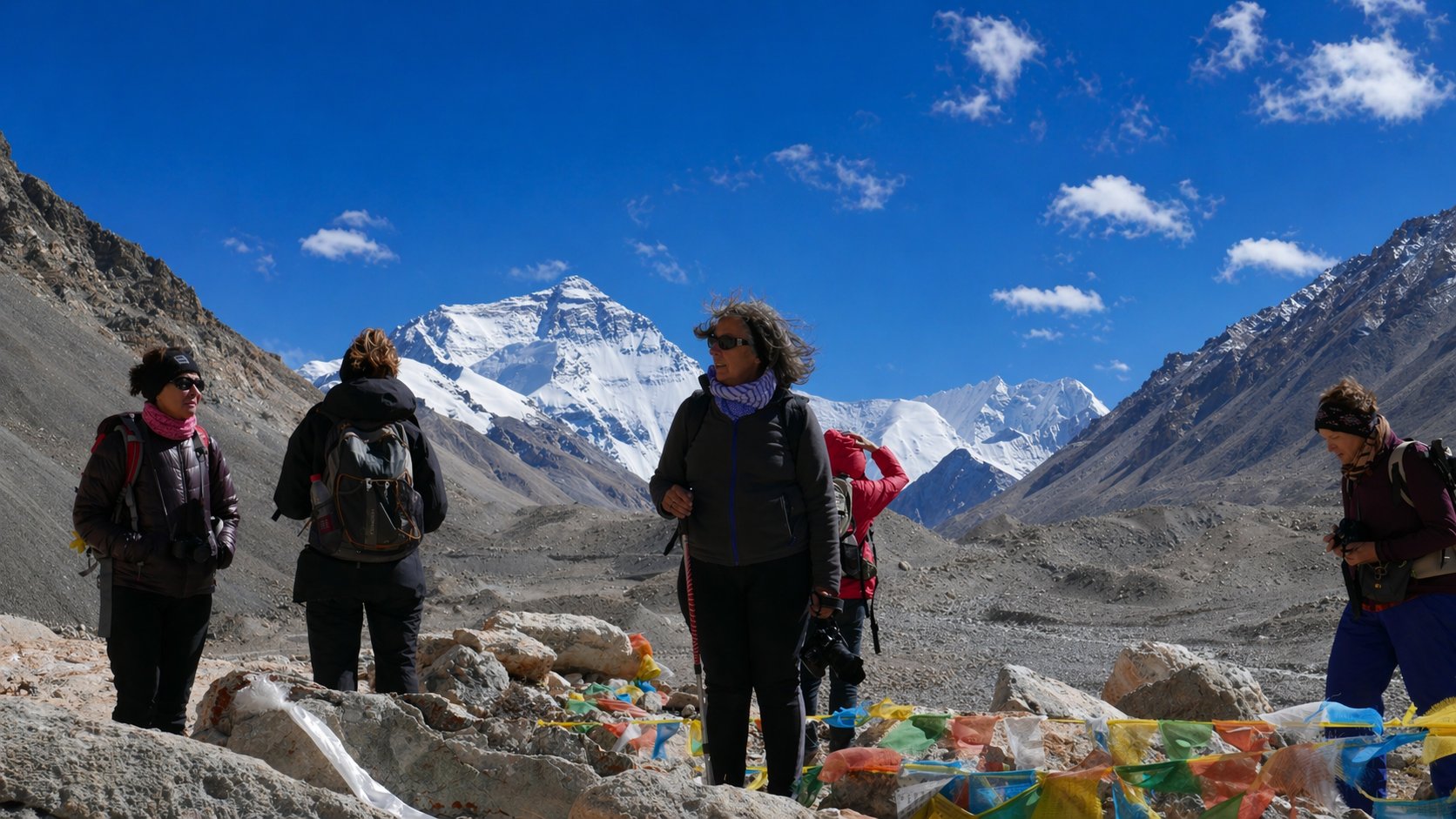
Altitude Acclimatization for Tibet Trekking | Everest Base Camp & Mount Kailash Guide
Trekking in Tibet is not only about walking through some of the most dramatic Himalayan landscapes on earth. It is about learning how to travel wisely at altitude — and doing so with respect for the environment your body will be moving through. From the ancient streets of Lhasa to Everest Base Camp Tibet, from the vast Tibetan plateau to the sacred Mount Kailash kora, Tibet travel takes you through some of the highest inhabited regions on the planet.
For many travelers, this is the adventure of a lifetime. But to experience it safely, altitude acclimatization for Tibet trekking must be taken seriously from the very first day of planning.
Why Tibet Is Different from Other High-Altitude Destinations
High altitude trekking in Tibet presents a unique set of challenges that set it apart from most other mountain destinations in the world. In Nepal, trekkers typically begin their journey at lower valley elevations and walk gradually upward over many days. In Tibet, almost every journey starts at altitude.
Lhasa altitude sits at approximately 3,650 meters above sea level. From there, classic Tibet trekking routes and overland journeys continue upward toward places between 4,500 and 5,500 meters. The tourist-accessible Everest Base Camp Tibet, located near Rongbuk Monastery on the north side of Everest, sits at around 5,000 meters. The original Everest Base Camp at 5,200 meters has been closed to tourists since 2017 due to environmental protection measures. The highest point of the Mount Kailash kora, Drolma La Pass, reaches approximately 5,630 meters.
This means that before your Tibet trek even begins, your body is already working harder than it does at sea level. Tibet altitude sickness is a real risk — not because Tibet is inherently dangerous, but because the altitude gain happens quickly and the plateau environment offers little margin for error.
The good news is that most healthy travelers adapt well when their itinerary is designed thoughtfully. After more than two decades of operating Tibet tours, Tibet treks, Everest Base Camp journeys and Mount Kailash tours, we at Tibet Shambhala Adventure have observed that the safest and most memorable trips are not the fastest ones. They are the ones planned with patience, gradual ascent, sensible walking, good hydration, proper meals, warm clothing and experienced local support.
Understanding Why Altitude Acclimatization Matters
At high altitude, atmospheric pressure decreases and the air contains less available oxygen. The higher you go, the harder your heart and lungs must work to supply your body with the oxygen it needs. According to the CDC Yellow Book, high-altitude environments bring lower air pressure, cold temperatures, low humidity, stronger ultraviolet radiation and reduced oxygen availability, all of which affect travelers.
This does not mean Tibet high altitude travel is dangerous for everyone. It means the body simply needs time to adapt. This natural adjustment process is called acclimatization. During acclimatization, breathing patterns change, the body begins to use oxygen more efficiently, and red blood cell production gradually increases.
The most important rule for altitude acclimatization for Tibet trekking is straightforward: do not rush. Acute mountain sickness is strongly associated with rapid ascent. The Wilderness Medical Society recommends gradual ascent — particularly a slow increase in sleeping elevation — as the primary prevention method for altitude illness.
This is precisely why a carefully designed Tibet itinerary matters so much. A good route is not just about beautiful scenery. It must give your body adequate time to adjust before you reach demanding destinations such as Everest Base Camp Tibet, Saga, Lake Manasarovar, Darchen or Drolma La Pass.
Common Altitude Symptoms to Watch For
Many travelers arriving in Tibet experience mild symptoms during the first one or two days. These can include a light headache, poor sleep, reduced appetite, mild fatigue or slight breathlessness when climbing stairs. These symptoms are common, often temporary, and usually improve with rest, hydration and slow movement.
The NHS lists common altitude sickness symptoms as headache, nausea, dizziness, tiredness, loss of appetite, shortness of breath and difficulty sleeping, and advises travelers to ascend slowly, rest and drink adequate water.
During Tibet trekking, it is important to distinguish between normal adjustment and genuine warning signs. A mild headache after arrival in Lhasa may be manageable and expected. However, worsening headache, repeated vomiting, confusion, inability to walk in a straight line, severe breathlessness at rest, chest tightness, blue lips, or a persistent cough with breathing difficulty are serious symptoms that require immediate attention. In any of these cases, the guide must be informed right away, and descent or medical assistance may be necessary.
At Tibet Shambhala Adventure, altitude safety is never treated casually. We always encourage early communication. If a guest feels unwell at any point during their Tibet trek, it is far better to tell the guide at the first sign of discomfort than to continue walking while hiding symptoms.
Start Your Acclimatization in Lhasa
For most Tibet trekking and overland journeys, Lhasa is the ideal place to begin acclimatization in Lhasa properly. At around 3,650 meters, Lhasa altitude is already high by most standards, yet it is manageable enough for a gradual and comfortable start. We recommend spending at least two to three full nights in Lhasa before heading to higher destinations such as Shigatse, Everest Base Camp Tibet or the Mount Kailash region.
This pre-trekking period in Lhasa is one of the most important elements of altitude acclimatization for Tibet trekking. Some travelers are tempted to rush directly to Everest or Kailash due to limited holiday time. But in Tibet travel, trying to save one day at the beginning often creates serious problems later. The body needs time, and Lhasa gives you exactly that.
Day One in Lhasa: Arrival and Gentle Rest
On the first day after arrival, no heavy activity should be planned. Take a gentle walk around your hotel or along Barkhor Street, enjoy the old town atmosphere and avoid climbing many stairs. Drink warm water or tea, eat a simple meal and sleep early. Even if you feel well and energetic on arrival, the first day is not the time to test your limits.
Day Two in Lhasa: Light Cultural Sightseeing
On the second day, sightseeing can be arranged carefully. Potala Palace, Jokhang Temple, Barkhor Street and Sera Monastery are classic Lhasa highlights, but the walking pace should remain deliberately slow. Potala Palace involves stairs and is better visited after the first night rather than immediately after landing. A good local guide will naturally control the group’s pace, allow time for rest and avoid overloading the day.
Day Three in Lhasa: Wider Exploration
By the third day, most travelers begin to feel noticeably more comfortable. This is a good time to visit Drepung Monastery, Sera Monastery or nearby cultural sites. For trekking groups, light walks in and around Lhasa also help the body adjust before moving higher onto the plateau.
Choose a Gradual Route Toward Everest Base Camp Tibet
A well-designed Tibet trekking itinerary should never jump too quickly from Lhasa to very high sleeping elevations. For Everest Base Camp Tibet, the recommended overland route is: Lhasa – Yamdrok Lake – Gyantse – Shigatse – Rongbuk / Everest Base Camp. This route is not only one of the most scenic journeys in Tibet, but also one of the best for natural acclimatization.
From Lhasa, travelers cross the highland scenery to Yamdrok Lake, one of Tibet’s most famous sacred lakes. You may pass high mountain viewpoints and passes along the way, but these are short stops rather than overnight stays. This distinction is important: standing briefly at a high pass is very different from sleeping there. Sleeping altitude is the most critical factor in altitude adaptation, not maximum daytime elevation.
Gyantse and Shigatse provide comfortable overnight stages. At around 3,900 meters, Shigatse represents a gradual altitude increase from Lhasa before the more significant gain to Everest Base Camp Tibet at around 5,000 meters.
When our guests ask about Everest Base Camp acclimatization on the Tibet side, we consistently explain that the route itself is part of the safety plan. A good itinerary brings travelers higher in measured steps, not in sudden jumps. This is especially important for those who plan to continue from Everest Base Camp toward Mount Kailash, as western Tibet plateau travel remains at high altitude for many consecutive days.
Important note on Everest Base Camp Tibet: The tourist-accessible base camp near Rongbuk Monastery is situated at approximately 5,000 meters. The original Everest Base Camp at 5,200 meters has been closed to general tourists since 2017 as part of environmental protection measures. Rongbuk Monastery itself sits at around 5,000 meters and remains one of the most extraordinary high-altitude experiences available to visitors on the north side of Everest.
Kailash Trekking Preparation: Acclimatizing Before the Mount Kailash Kora
The Mount Kailash tour is one of the most powerful and spiritually significant journeys available anywhere in Tibet, but it also demands serious preparation. The Mount Kailash kora is physically and spiritually demanding. Despite not being an extremely long trek by distance, the consistent altitude makes it genuinely challenging for most travelers.
Darchen, the starting point of the kora, sits at around 4,600 meters. Lake Manasarovar is at approximately 4,500 meters. Saga, a key stop on the overland route from Lhasa to Kailash, also exceeds 4,500 meters. This means that before the kora even begins, travelers will already have been sleeping at significant altitude for several nights.
For a safer and more comfortable Mount Kailash tour, we recommend the following gradual route: Lhasa – Gyantse – Shigatse – Everest Base Camp Tibet – Saga – Lake Manasarovar – Darchen. For travelers entering Tibet from Nepal via Kyirong, we recommend spending time in Kyirong before crossing the plateau, allowing the body to begin adjusting before reaching the Kailash region.
Before starting the Mount Kailash kora itself, spending one night near Lake Manasarovar and at least one night in Darchen is strongly advised. This gives the body meaningful additional time to adjust before the most demanding section: the crossing of Drolma La Pass at approximately 5,630 meters.
Kailash trekking preparation is not only about physical fitness. Many strong and highly fit travelers struggle if they ascend too rapidly, while slower walkers frequently complete the kora comfortably because they respect the altitude and listen to their body. Altitude does not respect athletic ability.
Walk Slowly: The Tibetan Plateau Is Not a Race
One of the simplest, most effective and most overlooked rules for trekking in Tibet safely is to walk slowly. At sea level, walking quickly, climbing stairs briskly or carrying a heavy pack feels entirely normal. In Tibet, the same movements require significantly more oxygen, and the body must work harder to provide it.
During the Mount Kailash kora, Everest Base Camp Tibet approaches, Ganden–Samye trekking or any high-altitude walk on the Tibetan plateau, maintain a steady and controlled rhythm. Do not compete with fellow travelers. Do not rush for photographs. Do not try to demonstrate your fitness. The most effective walking style at altitude is calm, slow and consistent.
When breathlessness occurs, stop briefly. Take slow, deep breaths — inhale gently and exhale steadily — and allow your body to recover before continuing. On steep sections, short steps are more effective than long, powerful strides. Your guide and local support team will help manage the group’s pace, particularly on high passes or exposed plateau sections where weather and wind add additional demands.
Hydration: Essential for Tibet High Altitude Travel
High altitude accelerates dehydration in ways that many travelers underestimate. Tibet’s air is dry and cold, the sun is intense, and travelers lose moisture through faster breathing without realizing it. Many people also drink less water because they wish to avoid frequent toilet stops during long drives or trekking days. This is a mistake that consistently worsens altitude symptoms.
Proper hydration is a foundational element of altitude acclimatization for Tibet trekking. Drink regularly throughout the day even when you do not feel particularly thirsty. Warm water, local Tibetan tea and light soups are all helpful. Avoid alcohol, especially during the first days in Lhasa or in the lead-up to trekking. The CDC advises avoiding both alcohol and heavy exercise during the first 48 hours after arrival above 2,400 meters (approximately 8,000 feet).
Staying hydrated does not guarantee that you will avoid Tibet altitude sickness, but dehydration reliably makes headaches, fatigue and discomfort significantly worse. The simple habit of sipping water consistently throughout the day can make a meaningful difference to your experience on the plateau.
Eating Wisely at High Altitude
Your digestive system also needs time to adapt. During the first three days in Tibet, we recommend eating simple, light meals and stopping before you feel completely full. Eating to around 70% of your full capacity is a practical and effective guideline.
Avoid heavy, greasy or excessively spiced meals, large portions of meat and overeating during the first days at altitude. At elevation, digestion slows down, and stomach discomfort can compound altitude symptoms considerably. Digestive problems such as diarrhea or vomiting can also cause rapid dehydration, which directly worsens acclimatization.
This does not mean avoiding Tibetan cuisine. You can still enjoy Tibetan noodles, yak dishes, momos, tsampa, butter tea and local food — simply introduce them gradually and choose warm, cooked meals over cold or heavy preparations. On trekking days, a simple but nourishing breakfast works best. Carrying snacks such as nuts, chocolate, dried fruit, biscuits or energy bars provides accessible energy during the walk, and a warm soup with a balanced dinner aids recovery in the evening.
Protecting Yourself from Sun, Wind and Cold
Tibet’s high-altitude sunshine is remarkable, but the ultraviolet radiation is intense. The thinner atmosphere at elevation means that travelers can be sunburned quickly even when the air temperature feels cool. Strong sunlight can also contribute to headaches and fatigue.
Always bring quality sunglasses, a wide-brimmed hat, high-SPF sunscreen and protective lip balm. On Tibet trekking days near Mount Kailash, Everest Base Camp Tibet, Namtso, Yamdrok Lake or high mountain passes, sun protection is not optional — it is part of your health preparation.
Cold and wind are equally serious factors for Tibet plateau travel. Even in summer, plateau weather can change rapidly and dramatically. A calm, sunny morning can become bitterly cold and windy by early afternoon. During any Tibet trek, dress in functional layers: a thermal base layer, a fleece or lightweight down jacket, a windproof outer shell, warm gloves and a hat. Staying consistently warm helps the body conserve energy and reduces vulnerability to respiratory illness.
Avoiding Illness Before and During the Trek
A common cold or respiratory infection may seem like a minor inconvenience at home, but at high altitude it can become genuinely serious. Cough, fever, nasal congestion or chest infection makes breathing more difficult at altitude, and in the most concerning cases, respiratory illness can increase the risk of more severe altitude-related complications.
Before traveling to Tibet, prioritize good sleep, avoid exhaustion, and take reasonable precautions in airports, flights and crowded spaces. During your trip, change out of wet clothing quickly, stay warm after exertion, and avoid sitting in cold wind.
If you develop a cold or respiratory infection before your Tibet trek begins, inform your tour operator or guide honestly. Depending on the severity, itinerary adjustments may be necessary. Safety must always take priority over schedule.
Daytime Naps and Rest Management
Many travelers feel naturally sleepy in the first day or two after arriving in Tibet. Rest is important and valuable, but extended daytime naps are not always beneficial, particularly during the early acclimatization period. Sleeping too long during the day disrupts nighttime sleep quality, and lying down for extended periods when the body is still adapting can make some travelers feel more uncomfortable rather than better rested.
A short rest during the afternoon is perfectly fine. However, rather than sleeping deeply for hours in the daytime, it is more beneficial to sit quietly, drink tea, read or take a gentle short walk if you feel well enough. At night, go to bed early and allow the body to recover naturally through proper overnight sleep.
Travelers with existing cardiovascular conditions, respiratory problems, high blood pressure or other significant medical issues should consult their doctor before traveling to high altitude.
Oxygen: Helpful Support, Not a Daily Substitute
Supplemental oxygen is helpful and sometimes necessary, but it should be used wisely and with appropriate medical judgment. In Lhasa, we generally do not recommend casual use of oxygen for mild symptoms, because early reliance on supplemental oxygen can interfere with the body’s natural acclimatization response.
However, oxygen should always be available for safety. On high-altitude Tibet trekking routes — including Everest Base Camp Tibet, the Mount Kailash kora and remote plateau expeditions — a responsible operator should carry oxygen cylinders and a basic medical kit at all times. For larger trekking groups or more demanding routes, additional oxygen supply and emergency response planning should be arranged in advance.
The most important point is this: oxygen is a safety support tool, not a replacement for sound itinerary design. Proper altitude acclimatization for Tibet trekking still depends fundamentally on gradual ascent, adequate rest, consistent hydration, slow walking and attentive monitoring.
Medication and Pre-Travel Medical Advice
Some travelers ask whether they should take altitude medication before arriving in Tibet. This is a medical question, and the most reliable answer must come from your own doctor or a travel medicine clinic — particularly if you have a history of heart disease, lung disease, high blood pressure, sleep apnea, pregnancy or previous severe altitude sickness.
Acetazolamide is commonly discussed for altitude illness prevention, and medical sources note that it can assist acclimatization for travelers at moderate to high risk. However, it is not suitable for everyone, and it carries potential side effects and contraindications. Do not begin taking medication based on another traveler’s recommendation alone. Always consult a qualified medical professional before departure.
Tibet Shambhala Adventure can provide practical on-the-ground support — including oxygen, first aid assistance and experienced guiding — but we do not replace professional medical advice. Responsible Tibet travel means combining excellent local planning with proper pre-trip health preparation.
Tibetan Tea, Local Wisdom and the Cultural Rhythm of the Plateau
Tibetans have lived with altitude for countless generations. Traditional plateau habits are woven into daily life, and one of the most universal is the drinking of warm tea. Dark tea, butter tea and warm herbal drinks are part of the way local people move through their world — including across high passes and into cold plateau regions.
For visitors, drinking warm tea supports hydration, encourages a slower and calmer travel rhythm, and connects you to the local way of life. While traditional Tibetan tea should not be seen as a medical treatment for Tibet altitude sickness, it is a genuine and meaningful part of living well at altitude.
This is one of the beautiful dimensions of Tibet travel: altitufr acclimatization for Tibet Trekking is not merely a medical process — it is also a cultural one. You learn to slow down, drink tea, walk gently, respect the mountains and listen carefully to what your body is telling you.
Mental Calm Is Part of Acclimatization
Altitude is primarily physical, but the mind plays a significant supporting role. Some travelers arrive in Tibet already anxious after reading alarming stories online and expecting problems. Anxiety genuinely can amplify the experience of headaches, poor sleep and breathlessness, making normal adjustment feel more severe than it is.
A calm mindset is not a luxury — it is part of your acclimatization strategy. Respect altitude without fearing it every moment. Follow your guide’s advice, walk slowly, stay hydrated, eat lightly, rest properly and communicate honestly. Most travelers who follow a thoughtfully designed itinerary adapt well and complete their Tibet trek or Mount Kailash kora without significant problems.
During trekking in Tibet, try not to overanalyze every physical sensation. A light headache does not always indicate a serious problem. But also do not dismiss symptoms that are worsening. The right balance is calm awareness — attentive but not anxious.
The Mount Kailash Kora: Day-by-Day Altitude Strategy
The Mount Kailash kora is a deeply special journey. Sacred, remote and physically demanding, it challenges travelers in ways that combine the spiritual and the physical. The altitude is significant from the very beginning, and the crossing of Drolma La Pass is the defining challenge of the entire circuit.
Day One of the Kora: Darchen to Dirapuk
On the first day, walking from Darchen toward Dirapuk, move slowly and conserve your energy deliberately. The view of Mount Kailash’s dramatic north face is genuinely breathtaking, and many travelers feel deeply moved here. But do not allow excitement to push you into walking faster than your body can handle at this elevation.
Day Two of the Kora: Crossing Drolma La Pass
The second day — crossing Drolma La Pass at approximately 5,630 meters — is the central challenge of the kora. Start early, dress warmly in full layers, carry sufficient water and energy snacks, and match the guide’s pace carefully. Short steps and steady, controlled breathing are essential. If you feel seriously unwell at any point, tell your guide immediately without hesitation.
Day Three of the Kora: Completion
The third day is generally easier in terms of gradient, but your body may be genuinely fatigued. Continue walking carefully and patiently until the kora is completed. Many pilgrims and travelers say that Mount Kailash teaches patience above all else. From an altitude physiology perspective, patience is exactly what your body requires.
Best Itinerary Logic for Safe Tibet Trekking
For altitude acclimatization for Tibet trekking, the ideal itinerary depends on the specific route, season, traveler fitness and entry point. But the core logic that applies to all high-altitude Tibet travel is:
- Arrive in Lhasa and rest properly before doing anything else
- Spend at least two to three nights in Lhasa before moving higher
- Progress gradually through Gyantse and Shigatse
- Sleep at intermediate altitudes before reaching Everest Base Camp Tibet or the Kailash region
- Avoid any heavy trekking immediately after arrival in Tibet
- Keep the first trekking day moderate whenever the itinerary allows
- Build in additional acclimatization days for more demanding routes
- Never continue ascending if symptoms are worsening
This logic applies equally to Everest Base Camp tours, Mount Kailash tours, Ganden–Samye trekking, Yamdrok trekking, nomad camp trekking and all other high-altitude Tibet adventures.
FAQ: Altitude Acclimatization for Tibet Trekking
Q: How long does it take to acclimatize in Lhasa before trekking?
Most travelers need a minimum of two to three nights in Lhasa before moving to higher elevations on a Tibet trek. For those planning demanding routes to Everest Base Camp Tibet or the Mount Kailash kora, additional acclimatization time is always beneficial.
Q: Is Tibet altitude sickness common for first-time visitors?
Mild symptoms such as headache, fatigue and poor sleep are common during the first day or two at Lhasa altitude. Serious altitude sickness is less common when travelers follow a gradual itinerary, stay well hydrated and communicate openly with their guide.
Q: How high is Everest Base Camp on the Tibet side? The tourist-accessible Everest Base Camp Tibet, located near Rongbuk Monastery on the north face of Everest, sits at approximately 5,000 meters. The original Everest Base Camp at 5,200 meters has been closed to tourists since 2017 for environmental protection.
Q: What is the highest point on the Mount Kailash kora? Drolma La Pass is the highest point of the Mount Kailash kora at approximately 5,630 meters above sea level. It is crossed on the second day of the three-day circuit and is the most physically demanding section of the kora.
Q: Should I take altitude medication for Tibet trekking? This is a personal medical decision that should be made in consultation with your doctor before departure. Some travelers benefit from altitude medication, but it is not suitable for everyone. A sound itinerary with gradual ascent is the most reliable foundation for safe Tibet high altitude travel.
Q: Can older travelers complete the Mount Kailash kora? Yes. Many older travelers complete the Mount Kailash kora successfully, often because they naturally walk at a slower, more deliberate pace and follow their guide’s advice carefully. Fitness level matters, but pace and attitude matter more at altitude.
How Tibet Shambhala Adventure Supports Altitude Safety
Safe Tibet trekking requires more than a beautiful itinerary. It requires experienced local operation from people who know the plateau.
Tibet Shambhala Adventure is a Lhasa-based Tibetan tour operator with extensive experience in high-altitude Tibet travel, trekking, Mount Kailash tours, Everest Base Camp Tibet journeys and remote plateau expeditions. Our support includes experienced Tibetan guides, careful itinerary design, oxygen supply, first-aid equipment, altitude-related medical support where appropriate and close day-to-day communication throughout your journey. For more demanding trekking routes, we can arrange porters, support vehicles, larger oxygen cylinders and emergency response planning.
In Tibet, local knowledge is irreplaceable. Weather patterns, road conditions, hotel altitude, walking pace, meal timing and emergency access all matter in ways that cannot be fully anticipated from outside. A good guide is not only someone who explains the history of monasteries and the significance of mountains. A good guide watches how guests walk, breathe, eat, sleep and respond to the altitude — and adjusts the plan accordingly.
Who Should Take Extra Care?
Most healthy travelers can visit Tibet safely with proper acclimatization, but some individuals should take additional precautions before and during Tibet travel. This includes those with heart disease, chronic lung disease, severe asthma, uncontrolled high blood pressure, a history of stroke, significant anemia, sleep apnea, pregnancy or a previous history of severe altitude sickness.
Older age alone does not disqualify someone from high altitude trekking in Tibet. Many older guests do extremely well on Tibet treks and the Mount Kailash kora because they respect the altitude and walk at a measured pace. Younger, highly fit travelers sometimes have more difficulty precisely because they move too quickly and underestimate what altitude does to the body.
Before booking any Tibet trekking itinerary or Mount Kailash tour, be honest with your operator about your health history. This allows us to design the most appropriate route, pace and support plan for your specific situation.
Final Reflection: Respect the Altitude, Travel Tibet Slowly
Tibet is not a destination that rewards rushing. The extraordinary beauty of Tibet — its vast open space, profound silence, sacred mountains, ancient monasteries, turquoise lakes, pilgrims on the road and the endless sky of the plateau — reveals itself most fully to those who travel with patience.
The most effective altitude acclimatization for Tibet trekking is not one single thing. It is the combination of a well-designed itinerary, gradual ascent, sufficient rest, consistent hydration, light and appropriate meals, sun protection, warm layered clothing, careful walking at a deliberate pace and the guidance of an experienced local team. When these elements come together, the journey becomes not only safer but more immersive, more meaningful and more unforgettable.
Whether you are planning an Everest Base Camp Tibet tour, a Mount Kailash kora, a Ganden–Samye trek, a Yamdrok Lake journey or a tailor-made Tibet trekking adventure, give your body the time it needs. Let Lhasa welcome you gently. Let the Tibetan plateau teach you its rhythm. Walk slowly, breathe deeply and allow Tibet to reveal itself to you — step by step, pass by pass.
For every traveler who dreams of high altitude trekking in Tibet, preparation is not a small detail at the edge of the plan. It is the foundation of the entire journey. With the right itinerary, the right local team and the right mindset, your Tibet trek can be not only safe, but deeply meaningful, genuinely beautiful and truly unforgettable.
Tibet Shambhala Adventure — Lhasa-based Tibetan tour operator specialising in Tibet trekking, Mount Kailash tours, Everest Base Camp Tibet journeys and tailor-made high-altitude plateau expeditions.