Tibet Travel Rules 2026: Essential Updates Every International Traveler Should Know
Tibet has always been one of the most inspiring destinations in Asia. For many international travelers, it is not just another place to visit, but a journey into a world of sacred mountains, high-altitude landscapes, ancient monasteries, deep spiritual culture, and some of the most dramatic scenery on earth.
However, traveling in Tibet is different from traveling in many other parts of mainland China or Asia. Because of Tibet’s high altitude, fragile environment, important cultural heritage sites, and special travel permit system, visitors need to plan carefully. This is especially true in 2026, as several important scenic areas have introduced new travel rules, ticket policies, visitor quotas, and environmental protection measures.
For anyone planning a Lhasa cultural tour, an Everest Base Camp Tibet tour, a Nepal–Tibet overland journey, or a Mount Kailash tour, understanding the latest Tibet travel rules 2026 is now more important than ever. These updates can directly affect your itinerary, your ticket availability, your accommodation plan, and even whether you can visit certain sites on the day you originally planned.
As a local Tibetan tour operator based in Lhasa, Tibet Shambhala Adventure has prepared this guide to help international travelers understand the most important Tibet travel rules 2026 in a simple, practical, and non-political way. Our purpose is not to make Tibet sound complicated, but to help you plan better, book earlier, travel more smoothly, and enjoy Tibet with fewer surprises.
Why the 2026 Tibet Travel Rules Matter
Many travelers still think that once they receive their Tibet Travel Permit, everything else can be arranged easily. In reality, the permit is only one part of the journey. In 2026, scenic spot reservations, daily ticket limits, official shuttle systems, environmental rules, and fixed visiting schedules have become increasingly important.
Some of Tibet’s most famous destinations now require more careful timing than before. The Potala Palace has a new weekly closing rule. Mount Kailash has a strict daily visitor quota. Lake Manasarovar has new transport restrictions and a camping ban. Popular scenic spots such as Everest Base Camp, Namtso, and Basongcuo also require advance reservations during busy periods.
This means that international visitors should not wait until the last moment to confirm a Tibet tour. A good local operator needs enough time to arrange permits, hotels, entrance tickets, guide schedules, transport, and special regional permits where required.
The most important message is simple: the Tibet travel rules 2026 make early planning much more valuable than before.
Potala Palace in 2026: Monday Closure and Tight Ticket Availability
For most travelers, the Potala Palace is the first great symbol of Tibet. Rising above Lhasa, it is one of the most important cultural and historical landmarks in the world. Almost every first-time visitor wants to include it in their Tibet itinerary.
One of the biggest Tibet travel rules 2026 updates is the new weekly closing arrangement for the Potala Palace. From 2026, the Potala Palace is closed every Monday for maintenance, cultural relic protection, and facility management. This means no tourist visit can be arranged on Monday.
This change has a direct effect on itinerary design. If your Lhasa sightseeing days fall on a Monday, your local operator must adjust the order of visits. For example, Jokhang Temple, Barkhor Street, Sera Monastery, Drepung Monastery, or Norbulingka may be arranged instead, while the Potala Palace visit must be placed on another available day.
The second issue is ticket availability. Because the Potala Palace is closed on Mondays, demand becomes especially strong on Sundays and Tuesdays. Many groups try to visit just before or after the Monday closure, which creates extra pressure on the ticket system.
The official Potala Palace website states that same-day tickets are not available, and visitors need advance reservation. China Daily also reported the Monday closure policy and seasonal visiting hours, including Tuesday to Sunday opening during the summer season.
For international travelers, this means your Lhasa itinerary should never be designed casually. The Potala Palace visit must be arranged according to real ticket availability, not only according to personal preference.
Tibet Shambhala Adventure Travel Tip
For a smooth Lhasa tour in 2026, we recommend allowing at least two full sightseeing days in Lhasa. This gives your local operator more flexibility to arrange the Potala Palace visit according to ticket availability and avoid problems caused by Monday closure or peak-season ticket pressure.
Mount Kailash in 2026: Daily Visitor Quota and Earlier Booking
Mount Kailash is one of the most sacred mountains in Asia and one of the most powerful journeys in Tibet. It attracts pilgrims, trekkers, photographers, spiritual travelers, and adventure lovers from many countries.
In 2026, one of the most important Tibet travel rules 2026 for western Tibet is the daily visitor quota for Mount Kailash. According to the latest local travel information, Mount Kailash has introduced a daily visitor limit of around 2,500 people. Once the daily quota is full, no additional visitors can be accepted for that day.
This is especially important during peak travel months, festival periods, and the 2026 Horse Year, when Mount Kailash is expected to receive stronger interest from both domestic and international travelers.
For foreign travelers, a Mount Kailash tour is more complex than a normal Lhasa city tour. It usually requires the Tibet Travel Permit, Alien’s Travel Permit, and additional arrangements for Ngari/western Tibet. Some travelers entering from Nepal also need to consider the China Group Visa process in Kathmandu. Public travel guidance also confirms that Mount Kailash travel requires multiple permits and must be arranged through authorized operators.
Because of the new visitor quota and the permit process, last-minute booking is not suitable for Mount Kailash. Even if hotels and vehicles are available, ticket and permit timing may still affect the final travel plan.
Tibet Shambhala Adventure Travel Tip
If you are planning a Mount Kailash tour in 2026, it is always recommended to confirm your trip at least one month in advance. This gives your local Tibetan agent enough time to arrange permits, route approval, hotel bookings, vehicle arrangements, guide schedules, and scenic area reservations properly.
Lake Manasarovar in 2026: Shuttle Bus System and No Private Vehicle Kora
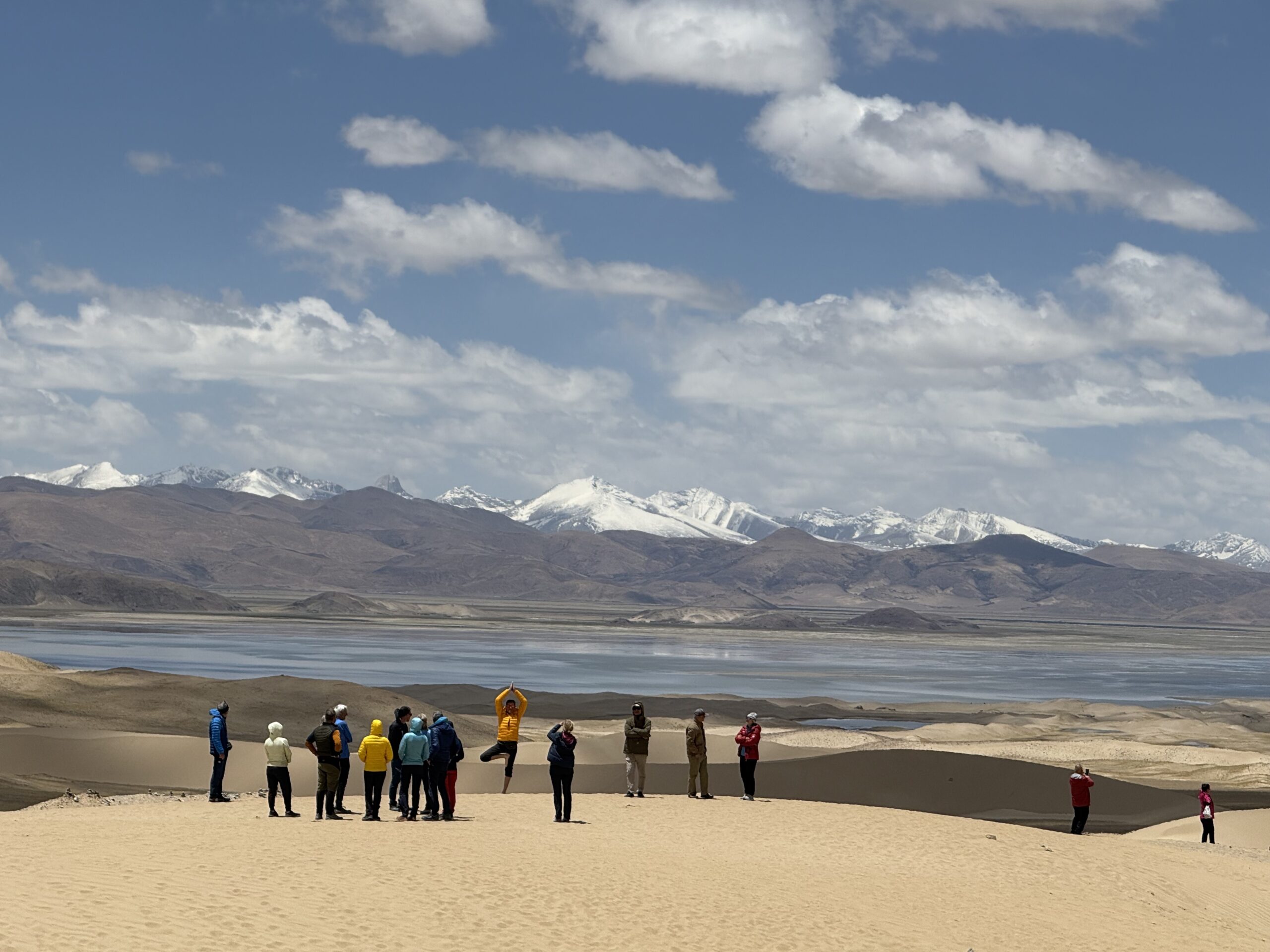
Lake Manasarovar is closely connected with Mount Kailash and is one of the most sacred lakes in Tibet. Many travelers dream of seeing the lake’s deep blue water, wide open horizon, and the distant view of Mount Kailash.
However, the travel style around Lake Manasarovar has changed in 2026. One of the key Tibet travel rules 2026 is that private vehicles are no longer allowed to freely drive around the Lake Manasarovar kora route. Instead, visitors are required to use the official scenic shuttle system.
This change is important because many older itineraries still describe flexible driving around the lake, stopping at different temples and viewpoints. In practice, the official shuttle currently stops only at selected core temples or viewpoints. Travelers who expect to visit every temple around the lake may need to adjust their expectations.
This does not mean Lake Manasarovar is less beautiful. It remains one of the most unforgettable places in western Tibet. But the visit must now follow the official scenic area transport arrangement rather than a completely private driving route.
For international travelers, the best approach is to plan the Lake Manasarovar visit realistically. A good itinerary should include enough time for the shuttle arrangement, photo stops, acclimatization, and possible waiting time during peak season.
Camping Ban Around Mount Kailash and Lake Manasarovar
Another major update in the Tibet travel rules 2026 is the full camping ban around Mount Kailash and Lake Manasarovar. In the past, some travelers hoped to camp near the lake or during parts of the Kailash region journey for a more adventurous experience. In 2026, this is no longer allowed.
The camping ban is mainly connected with environmental protection. The Mount Kailash and Lake Manasarovar area is a high-altitude ecosystem where the land recovers very slowly. Waste, uncontrolled camping, vehicle tracks, and disturbance to fragile vegetation can cause long-term damage.
For this reason, travelers must use official accommodation points and follow fixed travel routes. Wild camping, private tent stays, and overnight stays outside approved locations should not be included in a 2026 itinerary.
This is especially important for trekking travelers. The classic Mount Kailash kora already has fixed overnight places such as Dirapuk and Zuthulpuk. These should be arranged in advance, especially during busy travel periods.
Tibet Shambhala Adventure Travel Tip
For 2026 Mount Kailash tours, do not design the itinerary based on old camping-style information. Use proper guesthouses or approved accommodation points, and confirm the overnight plan before departure. This is safer, more responsible, and more suitable under the latest Tibet travel rules 2026.
Yamdrok Lake Ticket Update in 2026
Yamdrok Lake is one of the most popular day trips from Lhasa and is often included in Lhasa–Gyantse–Shigatse itineraries. Its turquoise water, mountain views, and easy access from Lhasa make it a favorite destination for photographers and first-time visitors.
According to 2026 travel updates, the “Winter Visit Tibet” preferential activity for Yamdrok Lake ended on March 15, 2026. From March 16, the adult ticket price has been adjusted to 100 CNY per person, with half-price policies still available for eligible groups with valid certificates. A public 2026 Yamdrok Lake guide also lists the general entrance fee as 100 RMB per person.
For most international travelers, the ticket price itself is not the biggest issue. The more important point is that scenic area fees and conservation fees should be clearly included in the tour quotation. This avoids misunderstanding between the traveler and the local operator.
At Tibet Shambhala Adventure, when Yamdrok Lake is part of the itinerary, we clearly explain scenic fees, conservation-related charges, and included services so clients understand what is covered before confirming the tour.
Advance Reservation for Popular Tibet Scenic Spots
One of the most practical Tibet travel rules 2026 is the need for advance reservations at popular scenic spots. This is not only for the Potala Palace and Mount Kailash. Other famous destinations such as Everest Base Camp, Namtso Lake, and Basongcuo may also require real-name ticket reservations, especially during peak travel season.
This means that a Tibet itinerary cannot always be changed freely at the last minute. If a guest suddenly wants to change the visiting date of Potala Palace, Everest Base Camp, or another major scenic spot, it may not be possible if tickets or reservations are already fixed.
For international travelers, this is why a professional local agent is important. The agent must understand permit timing, scenic ticket systems, hotel availability, route distance, altitude, and realistic driving time.
A well-designed Tibet tour is not only a list of beautiful places. It is a careful balance between culture, landscape, altitude, road conditions, permit rules, and ticket availability.
Foreign Travelers Still Need Organized Tibet Travel Arrangements
Another point international travelers must understand is that foreign visitors cannot travel freely in Tibet in the same way they may travel in Beijing, Shanghai, Chengdu, or other parts of mainland China.
For Tibet, international travelers still need to arrange their tour through an officially licensed local travel agency. They also need a Tibet Travel Permit before entering Tibet. Once in Tibet, they must travel with a licensed local guide according to the approved itinerary.
This does not mean every tour must be a big group tour. You can still arrange a private Tibet tour, a tailor-made Tibet itinerary, a family tour, a photography tour, a trekking tour, or even a solo private journey. But the arrangements must be made through the proper legal travel process.
For travelers searching online for “how to travel to Tibet,” this is one of the most important points to understand. The Tibet travel rules 2026 make professional planning even more necessary, especially for journeys to Mount Kailash, Everest Base Camp, or the Nepal–Tibet border.
Environmental Protection Rules in Western Tibet
Tibet’s beauty comes from its purity. The open grasslands, sacred lakes, snow mountains, wild animals, and remote valleys are part of what makes the journey so special. But this environment is also very fragile.
In 2026, environmental protection rules have become stricter in many alpine scenic areas, especially in western Tibet. Around Mount Kailash, Lake Manasarovar, Zhari Namco, and other high-altitude areas, travelers should follow responsible travel principles.
This includes:
Avoid littering anywhere on the plateau. Do not leave plastic bottles, food packaging, tissues, or prayer flag packaging in nature.
Do not step on fragile alpine vegetation for photography.
Do not disturb wild animals.
Do not collect plants, stones, or natural objects from protected scenic areas.
Do not camp in prohibited areas.
Follow the guide’s instructions at sacred sites, monasteries, lakes, and mountain passes.
For Tibet Shambhala Adventure, responsible travel is not just a slogan. As a local Tibetan-owned company, we believe tourism should protect the land, respect local culture, and benefit local communities. The latest Tibet travel rules 2026 are also a reminder that Tibet should be visited with respect, patience, and awareness.
High-Altitude Health Tips for Tibet Travel in 2026
Most major Tibet tours take place above 3,600 meters, and some journeys go much higher. Lhasa is around 3,650 meters. Everest Base Camp on the Tibet side is around 5,000 meters. The Mount Kailash kora crosses Dolma La Pass at over 5,600 meters.
For this reason, altitude preparation is an important part of Tibet travel planning. Even strong and experienced travelers can feel the effect of altitude.
During the first two days in Lhasa, avoid heavy exercise, running, alcohol, and late nights. Drink enough water, eat lightly, and allow your body to adjust slowly. A good itinerary should not rush directly from arrival to very high areas.
For Mount Kailash travelers, acclimatization is even more important. A journey from Lhasa to Shigatse, Saga, Lake Manasarovar, and Darchen gives the body more time to adjust before the kora. Travelers coming from Nepal through Kyirong should also include a sensible acclimatization plan before moving deeper into western Tibet.
Good Tibet travel planning is not about rushing to collect destinations. It is about reaching each place safely and enjoying the journey fully.
When Should You Confirm Your Tibet Tour in 2026?
Because of the updated Tibet travel rules 2026, early confirmation is one of the most important pieces of advice we can give.
For a Mount Kailash tour, we strongly recommend confirming your trip at least one month in advance. Mount Kailash requires more time because of special permits, long-distance logistics, accommodation pressure, and the daily visitor quota.
For normal Tibet tours such as a Lhasa city tour, Everest Base Camp Tibet tour, Tibet cultural tour, Nepal Tibet Overland Tour or Lhasa–Gyantse–Shigatse route, it is better to confirm at least 20 days in advance.
This gives your local agent enough time to:
Prepare and submit Tibet Travel Permit documents.
Arrange hotel bookings properly.
Reserve scenic spot tickets in advance.
Coordinate guide and vehicle schedules.
Adjust the itinerary if Potala Palace tickets or scenic reservations are tight.
Avoid last-minute price increases or hotel shortages.
During peak season, earlier confirmation is always better. This is especially true for April to October, the Mount Kailash season, summer holidays, and major festival periods.
Recommended Tibet Tours Affected by the 2026 Rules
The latest Tibet travel rules 2026 are especially important for the following tours:
Lhasa Cultural Tour
A Lhasa cultural tour usually includes the Potala Palace, Jokhang Temple, Barkhor Street, Sera Monastery, and Drepung Monastery. The Monday closure of the Potala Palace means the sightseeing order must be arranged carefully.
Everest Base Camp Tibet Tour
An Everest Base Camp tour often includes Lhasa, Yamdrok Lake, Gyantse, Shigatse, Sakya, Rongbuk Monastery, and Everest Base Camp. Advance reservation and permit timing are important, especially during busy months.
Mount Kailash Tour
This is the tour most affected by 2026 updates. The Mount Kailash visitor quota, Lake Manasarovar shuttle system, camping ban, fixed accommodation points, and special permit process all require early and professional planning.
Nepal–Tibet Overland Tour
For travelers entering or exiting through Kyirong/Rasuwagadhi border, the itinerary must be carefully arranged with China visa or China Group Visa requirements, Tibet permits, border timing, altitude adjustment, and road conditions.
Tibet Cultural and Nature Tour
Tours combining Lhasa, Yamdrok Lake, Shigatse, Namtso, Basongcuo, or other scenic areas should also consider real-name ticket reservations and environmental protection rules.
How Tibet Shambhala Adventure Helps You Travel Smoothly
Tibet Shambhala Adventure is a local Tibetan-owned tour operator based in Lhasa. We design and operate Tibet journeys with first-hand local knowledge, not copied information from outside sources.
For international travelers, our role is not only to arrange hotels and vehicles. We help you understand the real situation on the ground, including permit timing, scenic spot rules, altitude planning, ticket availability, road distances, cultural etiquette, and the best way to design a realistic itinerary.
Under the latest Tibet travel rules 2026, this kind of local experience becomes even more important. A beautiful itinerary must also be workable. It must respect official rules, protect the environment, allow enough acclimatization, and give travelers enough time to enjoy Tibet without unnecessary stress.
Whether you are planning a short Lhasa tour, a classic Everest Base Camp journey, a Nepal–Tibet overland trip, or a once-in-a-lifetime Mount Kailash tour, we recommend starting the planning early and working with a reliable local Tibetan team.
Final Thoughts: Plan Earlier, Travel Better
The new Tibet travel rules 2026 are not designed to stop travelers from visiting Tibet. In many ways, they help protect Tibet’s cultural heritage, sacred landscapes, and fragile high-altitude environment. They also encourage travelers and tour operators to plan more responsibly.
For international visitors, the key is preparation. Know the Potala Palace closing day. Understand that Mount Kailash has a visitor quota. Do not expect private vehicles to drive freely around Lake Manasarovar. Do not plan camping in prohibited areas. Confirm your trip early enough for permits, tickets, hotels, and route arrangements.
Tibet remains one of the most extraordinary travel destinations in the world. With the right planning, the right local support, and respect for the latest travel rules, your journey can still be smooth, meaningful, and unforgettable.
If you are planning to travel to Tibet in 2026, especially to Mount Kailash, Everest Base Camp, Lhasa, Lake Manasarovar, or across the Nepal–Tibet border, Tibet Shambhala Adventure will be happy to help you design a safe, authentic, and well-organized journey.
Recommended Tibet Tours Affected by the 2026 Rules
| Tour Type |
Major 2026 Factor to Watch |
Recommended Booking Window |
| Lhasa Cultural Tour |
Potala Palace Monday closure shifts sightseeing logic. |
At least 20 days in advance |
| Mount Kailash Tour |
Strict 2,500 daily visitor quota; full camping ban in effect. |
Minimum 1 month in advance |
| Everest Base Camp |
Real-name advance reservations required during peak months. |
At least 20 days in advance |
| Lake Manasarovar |
Private vehicles banned on Kora; mandatory scenic shuttle. |
Part of Kailash planning |
Start planning early. Travel with respect. Experience Tibet with local experts.