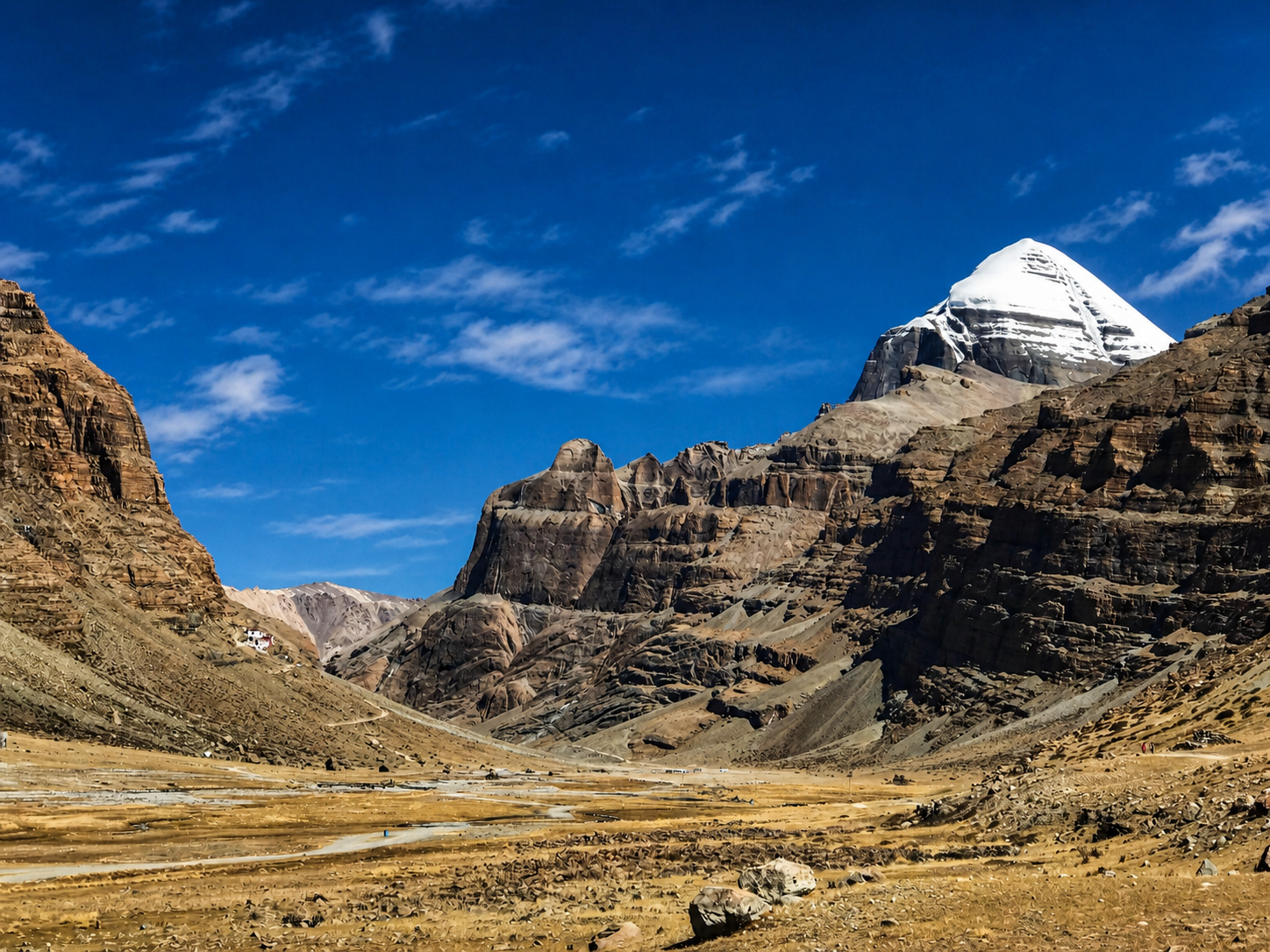
Mount Kailash Kora Travel Guide 2026: What to Know During the Year of the Horse
By Tibet Shambhala Adventure — Tibetan-Owned, Lhasa-Based Tour Operator
If you are planning a Mount Kailash Kora in 2026, this is the most important travel guide you will read before your journey. We are Tibet Shambhala Adventure, a Tibetan-owned and Lhasa-based tour operator with many years of hands-on experience organizing Mount Kailash tours, Western Tibet overland journeys, and Kailash pilgrimage trips for travelers from around the world. We have guided Indian Hindu pilgrims, Tibetan Buddhist travelers, international trekkers, and culture-focused visitors through the remote landscapes of Western Tibet for years.
This guide is written from real operational experience on the ground. We want to help you understand what 2026 actually means for your Kailash journey — not as a sales pitch, but as honest, practical advice from people who know this route deeply.
Quick Navigation — Mount Kailash Kora Travel Guide 2026
- Why 2026 Is a Special Year for Mount Kailash Pilgrimage
- What Makes the Year of Horse Kailash Tour Different from Normal Years
- Current Accommodation Situation in Darchen, Manasarovar, and the Kora Route
- Kailash Entrance Ticket Reservation and Local Travel Management
- Weather Conditions Around Mount Kailash in 2026
- Emergency Rescue Services at Dirapuk
- Why Travel Costs Are Higher for Kailash Pilgrimage 2026
- Best Time to Visit Mount Kailash in 2026
- Recommended Acclimatization Plan Before the Mount Kailash Kora
- Practical Route Advice: Saga, Zhongba, Payang, Darchen, and Manasarovar
- How Long You Need for a Complete Mount Kailash Tour
- High Altitude Safety and Kailash Trekking Preparation
- Cultural Etiquette During the Kailash Pilgrimage
- Tibet Permits and Booking Preparation for Foreign Travelers
- Final Advice from Tibet Shambhala Adventure
- Logistics and costs about Kailash Trekking
Key Takeaways: Mount Kailash Kora 2026 at a Glance
- 2026 is the Year of the Horse — one of the most spiritually significant years for Kailash pilgrimage in Tibetan Buddhist tradition.
- Book early — accommodation, permits, and guide services are filling up much faster than in normal years.
- Hotel prices in Darchen can reach RMB 1,500/night during peak periods (vs. ~RMB 680 in normal years).
- The kora itself takes 3 days, but allow 2–3 weeks for the full journey including travel and acclimatization.
- Dolma La Pass reaches 5,636 meters — proper acclimatization in Lhasa and Darchen before the kora is essential.
- Emergency rescue is available at Dirapuk — free oxygen provided; evacuation by van (RMB 150/person) or jeep (RMB 800/vehicle).
- Best time for most travelers: July, August, or mid-October.
- All foreign travelers must hold a Tibet Travel Permit plus additional Western Tibet border area permits — these must be arranged through a licensed operator.
Why 2026 Is a Special Year for Mount Kailash Pilgrimage
In Tibetan Buddhist tradition, each year of the twelve-year cycle carries a particular spiritual meaning tied to Mount Kailash. Among these, the Year of the Horse holds an especially elevated status for the Kailash pilgrimage. It is widely believed that completing the Mount Kailash Kora during a Horse Year brings spiritual merit equivalent to completing the circuit thirteen times in an ordinary year. For devout Tibetan Buddhists and Hindu pilgrims who consider Mount Kailash the abode of Lord Shiva, this is not a minor calendar detail — it is a once-in-twelve-years spiritual opportunity.
2026 is that year.
The significance of the Horse Year draws pilgrims from across the Tibetan plateau, from provinces across China, from India, Nepal, and from Buddhist and spiritual communities around the world. This convergence creates a travel environment that is fundamentally different from any normal year. If you are planning your journey based on previous experience or older travel blogs, please read this guide carefully. Much has changed, and much more will be different than you expect.
What Makes the Year of Horse Kailash Tour Different from Normal Years
The difference is not just spiritual. It is logistical, financial, and practical.
In a Horse Year, the total number of travelers heading to Mount Kailash increases dramatically. This includes Tibetan pilgrims who may make the journey specifically because of the Horse Year, domestic Chinese Buddhist travelers from cities across mainland China, Indian Hindu pilgrims applying through official pilgrimage programs, international trekkers and adventure travelers who time their visits to coincide with the Horse Year energy, and photography and culture-focused visitors drawn by the festival season and pilgrimage atmosphere.
All of these groups converge on a region that has very limited infrastructure. The road to Darchen is long. The Kailash Kora route has no luxury. The accommodation along the circuit is basic and finite. The local management system operates under strict regulations in order to have a safe Kailash Kora travel for all the pilgrimages and tourists. And in 2026, all of these pressures are amplified significantly.
Travelers who plan for a Year of Horse Kailash Tour must be prepared for higher costs, greater competition for accommodation, more complex coordination, and the need to book and confirm everything much earlier than usual.
Current Accommodation Situation in Darchen, Manasarovar, and the Kora Route
Darchen: The Main Base Town
Darchen is where most travelers rest before and after the Mount Kailash Kora. It is a small town at approximately 4,560 meters altitude, and it serves as the gateway to the kora circuit. In a normal year, Darchen has manageable accommodation options ranging from basic local guesthouses to modest hotels. In 2026, the situation is markedly different.
Hotel demand in Darchen has increased sharply this year. Rooms that were previously priced around RMB 680/US$ 100 per night can now reach RMB 1,500/US$225 or more during high-demand periods. This is not price gouging for its own sake — it reflects a genuine shortage of beds relative to the number of travelers arriving. Darchen has also seen some new hotel development in recent years, with better-quality local properties that offer improved comfort compared with the past. These newer hotels may not carry official international star ratings, but they represent a meaningful upgrade from conditions ten or fifteen years ago.
Travelers should understand clearly: comfortable hotel accommodation in Darchen is not comparable to what you find in Lhasa or Shigatse. You are in a remote high-altitude plateau town. The expectation should be adjusted accordingly.
Along the Kailash Kora Route
The guesthouses at Dirapuk and Zuthulpuk — the two main overnight stops along the Kailash Kora route — are basic rest houses. There are no luxury options. Dormitory beds and shared facilities are the standard. Hot water may not always be available. Heating is limited. In peak season, securing beds, especially for larger groups, can be genuinely difficult.
One important point for international travelers: advance online reservation for kora route guesthouses is generally not available in the way you would book a hotel through an app. In many situations, the local guide coordinates bed arrangements with local management offices and relevant local departments, often on arrival or through established relationships. This requires an experienced, locally connected guide — not something a traveler can arrange independently from overseas.
During the peak Horse Year season, travelers should not assume beds will simply be available. Your tour operator needs to plan this carefully, arrive with proper coordination, and have contingency plans in place.
Manasarovar Lake Accommodation
Most accommodation around Manasarovar Lake remains basic. Dormitory-style guesthouses with limited facilities are typical. The Manasarovar Hot Spring Hotel is one of the better local choices in this area. It is more expensive than the standard options, but it offers improved comfort and access to hot spring facilities — which many travelers find deeply restorative after long days of high-altitude driving and trekking. We often recommend this as a recovery stop, either before or after the Kailash Kora.
Kailash Entrance Ticket Reservation and Local Travel Management
Foreign travelers often ask whether they can book Kailash entrance tickets independently. The honest answer is no — not in the way you might book a national park entry ticket online at home.
For organized tours, the local guide and travel agency coordinate all ticketing and entry arrangements. During busy periods in 2026, this process may involve waiting, early coordination with local offices, and flexible scheduling. Travelers should follow the arrangement of their guide closely and avoid last-minute requests to change plans or timing.
Regarding group management: in the Kailash region, especially during peak Horse Year travel, larger groups may be subject to stricter official management. Travelers are expected to stay with their group and guide. Private hiking, wandering off the route independently, or separating from the group without guide coordination is not recommended and may not be permitted in certain areas.
These regulations exist for good reasons: safety in a remote high-altitude border region, environmental protection of a sacred landscape, and emergency management in an area where altitude sickness and sudden weather changes can create serious situations. With a reliable and experienced local operator, these arrangements are handled properly and smoothly. The rules are not obstacles — they are part of responsible travel in a very special and sensitive place.
Weather Conditions Around Mount Kailash in 2026
Weather in the Mount Kailash region is unpredictable even in normal years. In 2026, travelers should pay extra attention: recent conditions have been colder and more unstable than typical seasonal expectations.
Although May is not historically the heaviest snowfall month, significant snowfall has already affected the Kailash region in the 2026 travel season. The Dolma La Pass — the highest point of the Kailash Kora at approximately 5,636 meters — is particularly exposed. Snow, strong wind, freezing temperatures at night, sudden rain, and rapidly shifting weather conditions are all realistic possibilities throughout the main travel season.
Every traveler doing the Mount Kailash Kora must pack appropriately. Based on our operational experience, we recommend:
- A warm down jacket (genuine warmth, not fashion)
- A waterproof outer jacket and waterproof trousers
- Thermal base layers
- Good-quality trekking boots, broken in before the journey
- Warm gloves and a hat covering the ears
- Sunglasses and sun protection cream (UV exposure at altitude is intense)
- Trekking poles (especially helpful at Dolma La Pass)
- A small, comfortable daypack
- Personal medications including altitude sickness tablets as discussed with your doctor
- High-energy snacks
- A water bottle or insulated thermos
- Rain cover for your pack
This is not a checklist for extreme mountaineers. It is what you genuinely need for a comfortable and safe Kailash Kora in real conditions.
Emergency Rescue Services at Dirapuk: What You Should Know
This is important information that many travelers are not aware of, and it is worth knowing before you start the kora.
The Ngari Prefecture Government has established an emergency rescue station at Dirapuk, one of the main overnight stops on the Kailash Kora route. This station provides free supplemental oxygen for travelers experiencing altitude distress. If you are feeling unwell at Dirapuk, you can access oxygen support without charge.
Beyond oxygen, the rescue station also operates emergency evacuation vehicles for travelers who become too ill to continue the kora. There are two options available:
- Van (15-seat capacity): The evacuation cost is RMB 150 per person (approximately USD 23 per person) to be taken back to Darchen.
- Jeep (7-seat capacity): The jeep can be hired for RMB 800 total (approximately USD 118) for the vehicle, regardless of how many passengers are in it.
Both vehicles can take sick or distressed travelers immediately from Dirapuk back to Darchen, where more substantial medical attention or rest is available.
This is a meaningful safety improvement for the Kailash Kora, and we are glad the local government has put this infrastructure in place. It gives travelers — and their families — genuine reassurance that help is available if needed. That said, our strong advice is always prevention over rescue: pace yourself carefully, acclimatize properly before starting the kora, and do not push through warning signs of serious altitude sickness.
Why Travel Costs Are Higher for Kailash Pilgrimage 2026
We hear this question regularly: “Why is the cost of a Kailash tour so much higher in 2026 than what I read about in older articles?”
The answer is straightforward. The Year of the Horse creates a supply-demand imbalance across every element of the Western Tibet journey:
Hotel rates in Darchen and along the Western Tibet route have increased significantly due to higher demand. Guesthouse availability along the kora route is limited, requiring more complex pre-coordination. Vehicle and guide service demand has risen, and experienced guides are harder to secure at short notice. Local supply and food costs in remote Western Tibet reflect the overall increase in travelers and goods needed to support them. More complicated coordination during the peak pilgrimage year adds real operational cost to every well-managed tour.
Travelers should not compare 2026 Kailash pricing with what a normal year costs. A professionally arranged, legally compliant, and genuinely safe Mount Kailash Tour requires proper permits, experienced guides who know local relationships and regulations, reliable vehicles suited to rough plateau roads, emergency planning, realistic accommodation coordination, and honest communication throughout. This has real cost — and in 2026, that cost is higher than usual.
What we would caution against is choosing the cheapest option available and expecting the same level of service and safety. In a remote high-altitude border region during one of the busiest travel years in a generation, the quality of your operator matters more than usual.
Best Time to Visit Mount Kailash in 2026
Saga Dawa Festival Period (typically late May to late June)
Saga Dawa is the most sacred festival in the Tibetan Buddhist calendar, and Mount Kailash is the spiritual center of the celebration. The full moon day of Saga Dawa is believed to be a day of extraordinary spiritual power. The atmosphere during this period — the crowds of pilgrims, the prayer flags, the prostrations, the palpable devotion — is unlike anything else on the Tibetan plateau.
However, Saga Dawa in a Horse Year is extraordinarily crowded. Accommodation becomes very tight. Ticketing, transportation, and kora coordination become significantly more complicated. This period is suitable for travelers whose primary goal is the religious festival experience and who can accept high crowd levels, limited accommodation choice, and greater logistical pressure.
July and August
For many international travelers — especially those focused on trekking, photography, and cultural immersion — July and August offer a strong combination of warmer temperatures, beautiful plateau landscapes, and a somewhat more manageable travel environment than the Saga Dawa peak. This is generally our recommendation for first-time Kailash trekkers who want good conditions without the extreme festival crowds.
Early September to Early October
A second busy period as weather remains relatively good. Demand rises again as travelers try to fit in the journey before the season closes. Book early if this is your window.
Mid-October
After the main peak, traveler numbers decrease noticeably. The plateau landscape in autumn can be strikingly beautiful. Nights become cold — genuinely cold — but the daytime trekking conditions can be excellent. For travelers who prefer fewer crowds, can handle colder temperatures, and want a more contemplative experience, mid-October is worth serious consideration.
Our professional recommendation: For travelers seeking a good balance between weather, crowd levels, cost, and comfort, July, August, and mid-October are the strongest options. Saga Dawa is the right choice only for those who genuinely want the pilgrimage festival atmosphere and are fully prepared for the logistical complexity it brings in a Horse Year.
Recommended Acclimatization Plan Before the Mount Kailash Kora
The Kailash Kora is not just a trek. It is a three-day circuit at altitudes ranging from approximately 4,560 meters at Darchen to 5,636 meters at Dolma La Pass. Without proper acclimatization, altitude sickness is not a remote possibility — it is a serious risk.
We always recommend the following approach for travelers planning a Kailash Trekking journey:
Start in Lhasa. Arrive in Lhasa and spend several days there before moving west. Lhasa sits at approximately 3,650 meters — still high, but a meaningful step below the Western Tibet plateau. Use your Lhasa days to rest, walk gently, eat well, and let your body begin its adjustment.
Move gradually westward. Continue through Shigatse and then into Western Tibet. The overland drive from Lhasa to Darchen passes through multiple high-altitude passes and gradually increases elevation exposure. This gradual progression is valuable — do not rush it.
Spend time in Darchen before the kora. We recommend spending at least two nights in Darchen before beginning the Mount Kailash Kora. Darchen itself is at high altitude, and your body needs time to adjust to conditions at that level before you begin a demanding three-day circuit. In a normal year, one night in Darchen might suffice for some travelers. In 2026, with greater physical demands from the busy route and uncertain weather, two nights is a wiser approach.
Visit Manasarovar Lake and Rakshas Tal Lake first if possible. If your itinerary allows, visiting Manasarovar and Rakshas Tal before the kora gives you additional acclimatization time and allows you to experience two of the most spiritually significant lakes on the Tibetan plateau in a less rushed state.
After the kora, recover well. Completing the Kailash Kora is physically demanding. We recommend arranging a night at a better-quality hotel or at the Manasarovar Hot Spring Hotel after finishing the circuit. The hot spring facilities can help your body recover from the altitude, exertion, and cold.
Practical Route Advice: Saga, Zhongba, Payang, Darchen, and Manasarovar
The overland journey through Western Tibet involves long driving days on roads that are improving but still demanding. Choosing the right overnight stop on each driving day can make a meaningful difference in how you feel when you arrive at Darchen.
Saga is one of the most common overnight stops on the route to Western Tibet. It is a reasonable choice on many itineraries, but it is not always the best option depending on your exact schedule and routing.
Zhongba County is worth considering as an alternative transit stop. It generally offers comfortable local hotel options like Saga, and building your itinerary around Zhongba can reduce driving pressure on certain days. The distance from Saga to Zhongba is approximately 145 km — a reasonable day’s drive zfrom Kyirong to Zhongba county that avoids over-extending.
Payang can also serve as an overnight stop depending on your route direction. If you are traveling between Manasarovar Lake and Zhongba, note that the distance from Manasarovar Lake to Payang is approximately 200km, and from Payang to Zhongba is another approximately 95 km — meaning the full stretch from Manasarovar to Zhongba via Payang covers roughly 295 km. This is useful to understand when planning departure times and realistic daily distances.
The best overnight arrangement depends on your entry route (whether you are coming from Lhasa, from Kyirong border, or arriving from Nepal), your return route, and whether you are doing the kora before or after Manasarovar. A good local operator will plan this routing thoughtfully rather than applying a standard template to every traveler.
How Long You Need for a Complete Mount Kailash Tour
The Kailash Kora itself takes approximately three days to complete. But the full journey from your home country to Darchen and back is a very different calculation.
Travelers need to account for international flights, China visa or visa-free entry planning depending on their nationality and current policy at the time of travel, Tibet Travel Permit processing, travel from mainland China or from Nepal to Lhasa, acclimatization time in Lhasa, the long overland drive to Western Tibet, visits to Manasarovar Lake and Rakshas Tal Lake, the kora itself, and the return journey.
For many international travelers, a realistic full journey — including reasonable acclimatization time, travel days, and the kora — will require two to three weeks or longer. Travelers entering from Nepal via the Kyirong border, including those combining a Nepal trip with Tibet, may have different route options that affect total journey time. Travelers including other Western Tibet destinations such as the Guge Kingdom ruins will need additional days.
We would caution against rushing this journey. Arriving in Lhasa and trying to reach Kailash in the minimum possible days is not a wise approach, especially for first-time visitors to the Tibetan plateau. Allow enough time to do this journey properly. It is worth it.
High Altitude Safety and Kailash Trekking Preparation
The single most important thing we tell every traveler: take altitude seriously.
Acute Mountain Sickness (AMS) affects people regardless of fitness level, age, or previous travel experience. There is no reliable way to predict in advance how any individual will respond to the altitude of Western Tibet. What we can do is follow the principles that meaningfully reduce risk.
Walk slowly. Especially on the first day of the kora, there is a strong temptation to push ahead, particularly if you are feeling good. Resist this. The kora is not a race. Dolma La Pass — at 5,636 meters — is the hardest section. Arrive there slowly, rest, and descend carefully.
Drink plenty of water. Dehydration accelerates altitude sickness symptoms. Carry a water bottle and drink regularly throughout the day.
Avoid alcohol before and during the kora. Alcohol increases dehydration and can worsen altitude sickness symptoms significantly.
Consider yak or porter support for your luggage. Many travelers, even fit ones, find that carrying a heavy pack at altitude adds unnecessary strain. Local yak support or porters are available along the kora route and are worth using if it means you conserve energy for the pass.
Listen to your guide. An experienced local guide knows how to recognize early signs of altitude distress and knows the appropriate response — including when to recommend that a traveler use the emergency evacuation service from Dirapuk back to Darchen. Safety is always more important than completing the circuit.
And remember: if you feel seriously unwell at Dirapuk, the Ngari Prefecture Government rescue station is there with oxygen and evacuation options. Use them without hesitation if needed.
Tibet Shambhala Adventure always plans our Kailash itineraries with responsible pacing and realistic physical expectations. We do not encourage travelers to rush or push beyond safe limits.
Cultural Etiquette During the Kailash Pilgrimage
Mount Kailash is sacred. This is not a marketing phrase — it is a lived reality for millions of people across multiple faiths and traditions.
For Tibetan Buddhists, Kailash is the earthly representation of Mount Meru, the cosmic center of the universe. For Hindu pilgrims, it is the abode of Lord Shiva. For Jain practitioners, it is connected to the liberation of Rishabhadeva. For followers of Bon — Tibet’s pre-Buddhist spiritual tradition — Kailash has been a place of profound significance for thousands of years. Manasarovar Lake is equally sacred across these traditions.
When you join a Kailash pilgrimage journey, you are a guest in one of the world’s most deeply spiritual landscapes. Please behave accordingly.
Do not photograph pilgrims doing prostrations, deep in prayer, or engaged in personal religious practice without their permission. The prostration pilgrims — who measure the entire circumference of the kora with their bodies, laying flat against the earth with each step — deserve respectful distance, not intrusive cameras.
Walk the kora in a clockwise direction, as is the tradition for Buddhist and Hindu pilgrims. Do not walk counter-clockwise on the main circuit path without good reason.
Respect the environment. Do not leave rubbish along the kora route. Do not disturb cairns, prayer stones, or sacred markers. Do not bathe in Manasarovar Lake in ways that could be considered disrespectful in the local context. Treat Rakshas Tal Lake with the same respect — it is a sacred landscape, not simply a scenic backdrop for photographs.
Respect the monasteries along and near the route. Remove shoes where required. Dress modestly. Ask before photographing within monastery buildings.
The Kailash Kora is a privilege. Approach it with humility.
Tibet Permits and Booking Preparation for Foreign Travelers
Foreign travelers cannot enter Tibet independently. This is a firm requirement of Chinese government policy, not something that can be worked around. All foreign visitors must travel with a licensed Tibet travel agency and hold the proper permits before entering Tibet.
For a Mount Kailash Tour, the permits required go beyond the standard Tibet Travel Permit. Because Kailash and the surrounding areas are located in a remote border region of Western Tibet, additional special area permits are required. These permits take time to process, require confirmed itineraries and passport information, and must be arranged through a licensed operator.
Indian pilgrims traveling as part of official government-organized pilgrimage programs follow a separate set of procedures and should consult the relevant government bodies in India as well as their tour operator for the latest requirements. Individual Indian travelers arranging independent tours through a Tibet operator follow a different permit process.
Travelers from countries currently eligible for visa-free entry into China should verify whether that policy applies to Tibet specifically and whether permit processing requirements have changed before booking. Permit and visa regulations can and do change — sometimes with short notice. We always recommend travelers check the latest requirements directly with their tour operator before finalizing any booking.
For 2026 specifically, because of the Horse Year demand, permit slots and travel availability are filling up much faster than usual. If you are planning a Kailash pilgrimage in 2026, do not wait until the last few months to begin the planning process.
Final Advice from Tibet Shambhala Adventure
We have organized Mount Kailash tours through ordinary years and special years. We know what the Kailash region looks like in July when the sky is clear and the mountain is surrounded by pilgrims from six countries. We know what it feels like to stand at Dolma La Pass in early morning cold and help a traveler move forward slowly. We know what Manasarovar Lake looks like at sunrise when everything is still.
2026 is a genuinely special year. The spiritual energy of a Horse Year Kailash pilgrimage is something that words struggle to capture. We encourage anyone with a sincere desire to make this journey to plan carefully, start early, and approach the experience with open eyes and realistic expectations.
Choose an operator you trust — one with real ground experience, honest communication, and a genuine commitment to your safety and the integrity of the journey. Tibet Shambhala Adventure has built our work around these values, and they guide everything we plan for our travelers.
If you have questions about planning your Kailash pilgrimage in 2026, we welcome your inquiry. We will give you honest information, not just what you want to hear.
The mountain is there. Plan well, and you will be ready.
Plan Your 2026 Kailash Journey Early — Availability Is Limited
As we have explained throughout this guide, 2026 is not a normal year. The Horse Year draws significantly more travelers to Mount Kailash than any regular season, and the entire supply chain — permits, accommodation, guides, and vehicles — is feeling that pressure already.
If you are seriously considering a Kailash Pilgrimage 2026, the most important step you can take right now is to begin the planning conversation early. Tibet Travel Permits and Western Tibet border permits require time to process. Darchen hotel blocks fill up. Experienced guides with real Kailash route knowledge are not available at short notice during Horse Year season.
Tibet Shambhala Adventure welcomes inquiries from individual travelers, small private groups, family pilgrimages, Indian Hindu pilgrims, Buddhist travel groups, and adventure trekkers. We will give you an honest assessment of what is still available for your preferred dates, what the realistic costs will be in 2026, and what kind of itinerary genuinely suits your needs.
Do not leave this until three months before your travel date. For the Horse Year, the window for well-planned journeys is closing faster than people expect.
Reach out to Tibet Shambhala Adventure today to check availability for your 2026 Mount Kailash Tour.
Tibet Shambhala Adventure is a Tibetan-owned, Lhasa-based tour operator specializing in Mount Kailash tours, Western Tibet overland journeys, Tibet trekking tours, cultural experiences, and tailor-made private Tibet travel. All tours are organized by experienced local Tibetan guides with genuine knowledge of the plateau.